Imagine a world where 91% of your competitors are actively using AI in their marketing. That's not a future prediction; it's the reality of August 2026. Artificial intelligence has moved beyond emerging technology to become the indispensable core of strategy and operations in digital marketing. We're seeing unprecedented adoption, significant productivity gains, and a rapid evolution in how brands connect with consumers, all driven by advanced AI capabilities.
The AI Tsunami: Marketing's New Normal in 2026
AI is now deeply embedded in digital marketing workflows. A staggering 91% of marketers report actively using AI in their work, a substantial increase from 63% just last year. This near-universal adoption means 78-88% of marketers globally use AI tools daily, according to sota.media. Salesforce's State of Marketing series shows this rapid progression in recurring workflow adoption, rising from 51% in Q1 2024 to 76% in Q1 2025, and reaching 87% in Q1 2026. This marks the fastest sustained adoption rate of any major technology in marketing's recorded history, as noted by wsiworld.com.
Key developments shaping 2025-2026 include:
- Hyper-Personalization at Scale: AI now enables dynamic website content, individualized email journeys, and real-time adaptive augmented reality content. This leads to tailor-made campaigns that perform better, as highlighted by dotdigital.com.
- Advanced Predictive Analytics: Next-generation tools anticipate customer needs, optimize product recommendations, and forecast trends. This elevates ROI across paid search, social media, and display advertising, states intelegencia.com.
- Generative AI for Content Creation: Generative AI has revolutionized content production. It allows for the instantaneous creation of blog articles, social posts, ad copies, product descriptions, and even immersive video experiences. Tools like Runway, Synthesia, Kling, OpenAI's Sora, and Google's Veo 3 are actively advancing these capabilities, making content creation faster and more diverse.
Beyond Google: The "Search Everywhere" Imperative
The concept of "AI search" is no longer a singular entity. Google's AI Overviews, Bing Copilot, and ChatGPT Search mean discovery is no longer Google-first, necessitating a "Search Everywhere" optimization strategy. Model swaps, like Google quietly integrating Gemini 3 into AI Overviews and AI Mode on January 27, 2026, are the new algorithm updates. These often go unannounced and significantly impact visibility, as reported by searchengineland.com.
The rise of AI Agents further complicates the landscape. The shift towards "agentic AI" means customers interact not just with people but also with algorithms, agents, and chatbots. This leads to the rise of B2R (business-to-robot) marketing. Tools like Salesforce Agentforce, HubSpot Breeze AI Agents, and Adobe Agent Orchestrator are showing progress in automating structured marketing tasks, according to roboticmarketer.com.
The Numbers Don't Lie: AI's Impact on ROI and Productivity
The financial impact of AI in marketing is undeniable. The global AI marketing market reached an estimated $57.99 billion in 2026, demonstrating significant growth from $6.46 billion in 2018. It's projected to reach $107 billion by 2028, with the broader global AI market forecast to hit $1.675 trillion by 2031, according to biziq.com and gsdcouncil.org.
Adoption rates are soaring, with 91% of marketers actively using AI and enterprise adoption reaching 94%. This widespread use translates directly into efficiency. AI saves the average marketer between 6.1 and 13 hours per week, a meaningful productivity lever. An impressive 83% of marketers report increased productivity after adopting AI, states omnibound.ai.
The return on investment is equally compelling. AI-driven campaigns deliver 22% higher ROI, 32% more conversions, and 29% lower acquisition costs compared to traditional methods. AI content drafting specifically shows a 3.2x ROI, followed by personalization engines at 2.7x, notes vertexplus.com. AI-generated content also reduces production costs by 65% and enables teams to deliver content 84% faster than traditional workflows. A massive 94% of marketers plan to use AI for content creation and blogging in 2026, making it a standard production method, as per thestacc.com.
Real-World AI: Brands Leading the Charge
Brands are already demonstrating the power of AI in innovative ways in 2026:
- Hettich used generative AI visuals to create "disaster-room" images for an Instagram campaign, inviting users to "roast the room" before revealing AI-redesigned "after" versions featuring their products, as reported by octopusmarketing.agency.
- Unigloves employed Midjourney AI and Adobe Firefly to generate 250 lifelike images for their Derma Shield launch, showcasing generative design.
- Burger King ran the "Million Dollar Whopper Contest," leveraging AI for creative generation, according to tlgmarketing.com.
- Nike implemented AI in their "Never Done Evolving" campaign.
- Mongoose Media scaled SEO content using Jasper AI, a tool also popular for no-code content creation on platforms like TashiOS.
- Hostinger achieved over 1 million weekly clicks with Surfer SEO, another powerful AI-driven content optimization tool.
- Cosabella utilized AI for personalized email marketing.
- BMW integrated generative AI into luxury marketing initiatives.
- The Washington Post leveraged AI for content distribution.
- Malaria No More featured a David Beckham AI campaign to raise awareness.
- L'Oréal deploys ModiFace and SkinConsult AI for personalized beauty experiences.
Leading AI marketing tools in 2026 include LLMs and marketing assistants like ChatGPT, Claude, and Google Gemini. For content and SEO, Jasper AI, Grammarly, Copy.ai, and Surfer SEO are essential. Generative AI for design and video sees Adobe Firefly, Canva, Runway, Synthesia, Kling, OpenAI's Sora, and Google's Veo 3 at the forefront. AI marketing automation and CRM solutions include HubSpot, Salesforce, ActiveCampaign, Gumloop, Zapier, and Make.com.
Navigating the New Frontier: Ethics, Regulations, and Trust
With great power comes great responsibility. Ethical use of AI has become a critical principle. The European Union's AI Act, set to be enforced from August 2, 2026, introduces transparency rules. It requires clear disclosure when people interact directly with AI, such as chatbots, and for certain AI-generated or manipulated content, as detailed by navigateai.org. The UK is also moving in a similar direction, with the ASA expecting ads not to mislead, regardless of how they are made.
Experts widely agree that AI is no longer a future trend but "the new reality." Gartner analysts predict that AI will reshape every element of marketing, from customer journeys to organizational structures, driven by agentic AI and authenticity-driven content ecosystems. Ryan Baltrip, Ph.D., notes that "The brands that will build durable trust in the verification economy are those that invest in verifiable credibility, not those that optimized for output velocity," a crucial point for businesses building with AI. The consensus is that AI is becoming the "connection across creativity, data, and customer experience," moving from a mere tool to an integrated intelligence, according to entrepreneur.com.
However, there's a significant risk of trust erosion. While AI boosts output, consumer comfort with brands using AI fell from 57% in 2023 to 46% in 2024, as noted by ny-ave.com. This highlights the imperative to balance automation with human oversight and trust-building. Marketers must prioritize fairness, transparency, accountability, and privacy to maintain consumer trust. Manipulative personalization and undisclosed AI content pose significant risks.
What's Next? Predictions for AI in Marketing
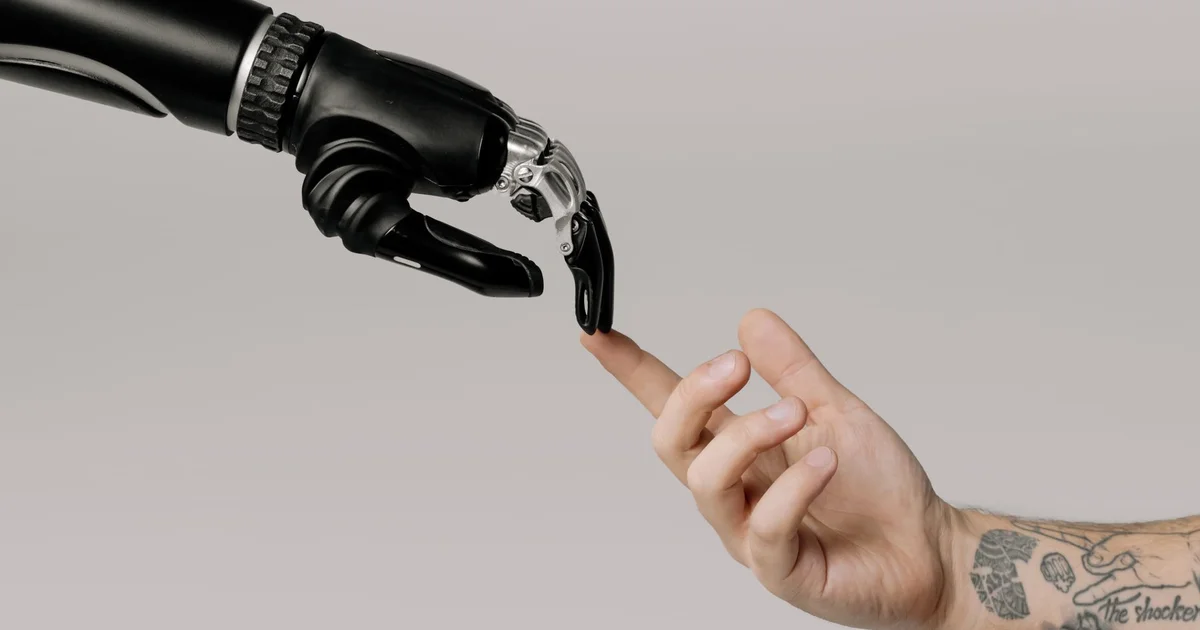
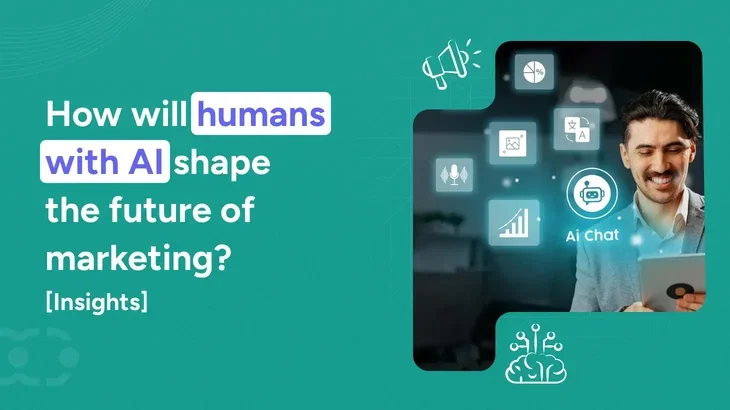
The future of marketing involves marketers and machines collaborating, not competing. AI will augment human creativity, allowing marketers to focus on strategy and deeper customer understanding. This human-AI collaboration is key to unlocking the full potential of these tools.
Dynamic and conversational experiences are the future. Websites will evolve from static destinations to dynamic, real-time generated interfaces, with UIs assembled on demand for individual users. Conversational AI will play a larger role in customer engagement, support, and lead qualification, often initiating earlier in the customer journey, states technologychecker.io.
"Search Everywhere" optimization will intensify. Brands must optimize for discovery across multiple AI-powered platforms beyond traditional Google search, including ChatGPT, Perplexity, and AI Overviews. Brand mentions across trusted sources are becoming increasingly important for "AI authority." Recent news from August 2026 underscores this shift:
- OpenAI's Advertising Advancements: OpenAI is testing a new ad format that replaces the traditional click-to-website model with a "click-to-conversation" approach. ChatGPT Ads Manager received significant updates, including custom audiences for micro-targeting campaigns. OpenAI is also integrating with platforms like Yelp to enhance its product competitiveness, as reported by martech.org.
- Google's AI Tools for Marketing: Google rolled out new AI tools in Google Ads and Google Analytics on August 10, 2026. These include AI-powered summaries on homepages, the ability to create visual reports with simple text prompts, and performance benchmarking against similar businesses. Google also confirmed testing new buttons on its homepage to drive users to AI-powered search features, according to blog.google.
- Google Ads AI Max Migration: Google announced a timeline for migrating Search campaigns to AI Max, with automatic migration of Campaign-level Broad Match and legacy Automatically Created Assets campaigns scheduled between September 1-30, 2026, as per searchengineland.com.
- Anthropic's Watermarking: On August 11, 2026, Anthropic added AI text watermarking to its Claude models worldwide, addressing concerns around AI-generated content authenticity, as reported by youtube.com.
Investing in robust data infrastructure, secure storage, management, and governance systems is crucial to support AI applications and ensure compliance with rising regulatory standards. This foundational work will enable marketers to effectively use the power of AI.
Despite widespread adoption, a significant challenge remains in the skills gap, with 58% of marketers citing it as their top concern. Only 17% have received comprehensive job-specific AI training, according to schoolofdigitalmarketing.co.in. This highlights the urgent need for continuous learning and upskilling in AI fluency across the industry.
AI digital marketing in August 2026 is characterized by pervasive integration, hyper-personalization, and generative capabilities that are transforming content creation and customer engagement. While offering immense opportunities for efficiency and ROI, the industry is also grappling with critical ethical considerations, evolving regulatory landscapes, and the imperative to balance automation with human oversight and trust-building to ensure sustainable growth.
Ready to build your own AI-powered business, website, or app without writing a single line of code? TashiOS lets you describe your ideas in plain English and transform them into real, live online businesses. Start free with AI credits and see what you can create today.