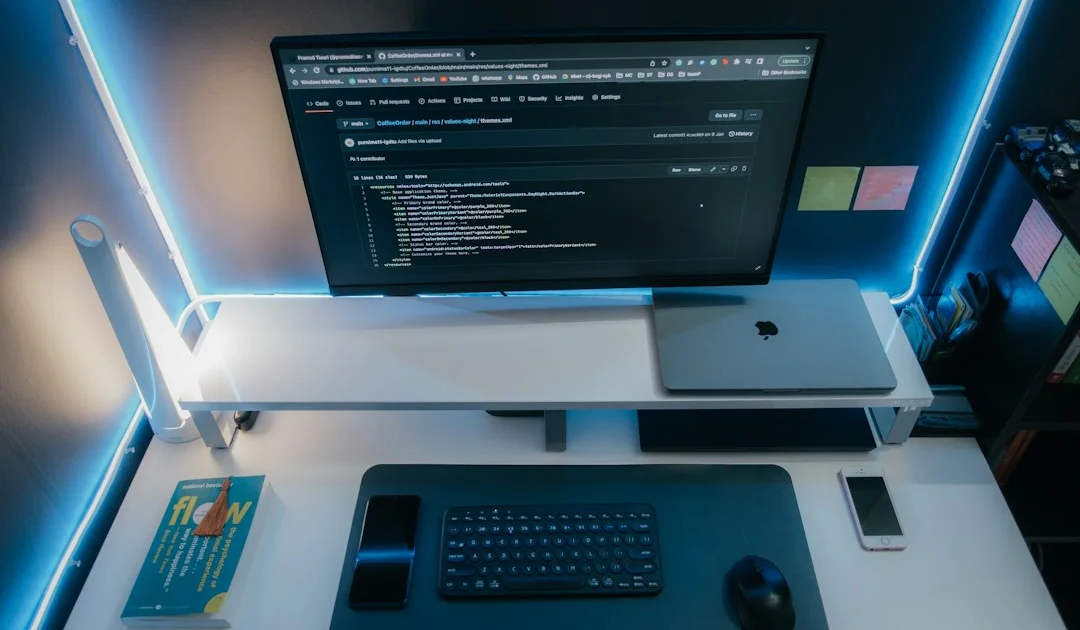
Imagine launching a fully functional website in less time than it takes to brew a pot of coffee. That's not a distant dream; it's the reality of October 2026. The average time to produce a complete website draft has plummeted from a full work week to a mere 15 minutes, as reported in March 2026. This astonishing acceleration isn't magic; it's the profound impact of Artificial Intelligence on web design.
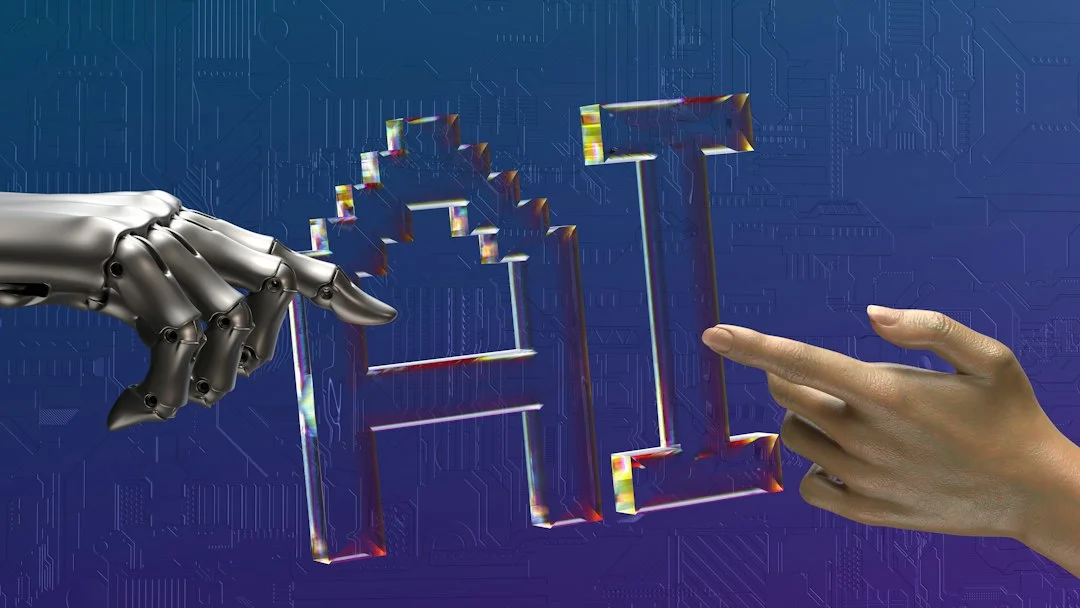
AI isn't just an assistant anymore; it's a co-designer, a rapid prototyper, and a workflow orchestrator. The digital world we inhabit is evolving at breakneck speed, with AI now deeply embedded in its very fabric. This shift isn't just about speed; it's about making professional-grade web creation accessible to everyone, empowering a new wave of entrepreneurs and innovators.
The AI Web Design Revolution: An October 2026 Snapshot
As of October 2026, the integration of AI into digital workflows is undeniable. A staggering 93% of web designers now use AI tools, primarily for generating page layouts, a task that previously consumed significant time (Source: buildez.ai). This isn't about AI taking over completely; instead, it's a powerful collaboration. The prevailing approach is clear: 'let AI draft, let humans refine,' with 94% of designers still reviewing and perfecting AI-generated outputs before they go live.
This human-AI partnership has redefined productivity. AI prototypes layouts in minutes, a job that once took days. It's a testament to how AI handles the repetitive heavy lifting, freeing up human creativity. This sentiment resonates with expert opinions, which suggest that 'AI won't replace your web designer in 2026, but it has already replaced half their busywork' (Source: agencypartner.com). The Figma 2025 AI report reinforces this, noting that 85% of designers and developers see learning to work with AI as essential for their future success.
Key trends shaping AI web design in 2026 include:
- AI-Generated Layouts with Human Editing: AI rapidly prototypes designs, drastically cutting initial development time.
- Hyper-Personalization: Websites adapt in real-time to individual user preferences and behaviors.
- 3D Visuals and Immersive Experiences: Integrating interactive 3D models and Augmented Reality for richer engagement.
- Voice Search Optimization: Designing content for conversational queries, influencing a significant portion of web traffic.
- Dark Mode as Default: Crafting dual-mode systems to cater to the overwhelming user preference for dark interfaces.
- Accelerated Development: With 45% of front-end UI code projected to be AI-generated by year-end, development cycles are shrinking dramatically.
These trends signify a profound shift, making web creation faster, smarter, and more tailored than ever before.
Beyond Code: "Vibe Coding" and Agentic AI Take Center Stage
One of the most exciting developments this year is the rise of 'vibe coding.' This innovative method lets creators describe their vision in natural language, and AI translates those descriptions directly into functional code. It means you can focus purely on your ideas, leaving the syntax to the machines. Lovable, a Stockholm-based platform, saw its valuation skyrocket from $1.8 billion to $13.3 billion in just eight months, boasting $500 million in annualized revenue, thanks to its 'vibe coding' approach.
But AI's role extends further with agentic AI frameworks. These systems don't just generate code; they can execute complex, multi-step tasks within website workflows, acting as intelligent work partners. Take Elementor's Angie, for example. This agentic AI framework operates within WordPress, automatically understanding site context to build components directly within the dashboard (Source: elementor.com). Meta also introduced Muse Wonder and Muse Wonder Full in October 2026, advanced AI models designed for similar complex agentic tasks, including building functional applications.
Platforms like TashiOS are at the forefront of this movement, empowering users to articulate their ideas in plain English to build real apps, websites, and online businesses without writing a single line of code. This democratization of design means anyone with a vision can become a creator, bypassing traditional technical barriers.
The Era of Dynamic Web: Hyper-Personalization and Immersive Experiences
Websites in 2026 are no longer static brochures; they're dynamic, living entities. Hyper-personalization is a key trend, where sites adapt content and layouts in real-time based on individual user behavior, preferences, and past interactions. This creates uniquely tailored experiences, significantly boosting engagement and conversion rates. Imagine a website that understands your browsing history, predicts your needs, and presents exactly what you're looking for, all automatically.
Visuals are also evolving rapidly, moving beyond flat images to truly immersive experiences. 3D visuals and interactive product experiences are becoming standard, especially in e-commerce. Websites featuring 3D product visualization are seeing conversion lifts of up to 40%. This isn't just about aesthetics; it's about giving users a more tangible sense of a product before they buy. Augmented Reality (AR) is projected to drive an impressive $6 billion in e-commerce sales this year, transforming how users interact with products online, letting them virtually 'try on' or 'place' items in their own space (Source: agencypartner.com).
Beyond visuals, how we interact with websites is shifting. Voice search optimization is expected to influence 30% of web traffic in 2026, requiring designers to structure content with question-format headings and conversational language. This means thinking about how people speak their queries, not just type them. Furthermore, dark mode isn't just an option anymore; it's becoming the default. Over 80% of users prefer dark mode on at least one device, with that figure expected to hit 90% by the end of 2026, making dual-mode design systems a necessity for optimal user experience and accessibility (Source: agencypartner.com). Ignoring these preferences means falling behind.
The Numbers Speak: AI's Impact on Productivity and Market Growth
The figures confirm AI's transformative power. The global web design market is valued at $60.9 billion in 2026. Within this, the AI website builder segment alone has grown to $3.24 billion this year, a 20% increase from 2025. This segment is poised for explosive growth, projected to reach $17.43 billion by 2035, with a Compound Annual Growth Rate (CAGR) of 20.55% (Source: precedenceresearch.com).
Worldwide AI spending is anticipated to reach $2.52 trillion in 2026, a remarkable 44% year-over-year increase. Small businesses are quickly adopting generative AI, with 58% using it this year, a significant leap from just 23% in 2023 (Source: einnews.com). The benefits are clear: over 84% of developers report increased efficiency with AI tools (Source: yacss.site). These tools also offer substantial cost reductions, cutting website development costs by 50-90% for common site types (Source: buildez.ai).
A 10Web study revealed that companies reduced initial production time by an average of 70% when using AI during the website creation phase. Moreover, AI-driven layout optimization leads to an average increase of 15-17% in conversion rates. These aren't just incremental gains; they represent a fundamental shift in how efficiently and effectively we build and optimize for the web.
Innovators and Integrations: Real-World AI in Action
The market is bustling with innovative AI tools and platforms. We've seen v0 by Vercel translate interface ideas into shippable code and Bolt.new achieve an impressive $40 million in annual recurring revenue (ARR) within just six months of its launch. Figma AI and Webflow AI offer powerful AI-powered features for visual design, prototyping, and generating multi-page responsive websites from descriptions. Webflow even integrated a Claude connector in February 2026 for enhanced AI capabilities (Source: wedoflow.com).
For immersive experiences, Spline AI lets developers generate interactive, web-ready 3D models from text prompts. Then there are the popular AI website builders like Wix ADI, Hostinger Horizons, and Squarespace AI, known for their ease of use. Hostinger Horizons alone has helped build over one million websites and web apps, with 93-95% of its users being first-time website builders (Source: buildez.ai). This truly highlights the democratization of web creation.
Other notable players include Relume, which generates sitemaps and wireframes that can be exported directly into Figma or Webflow, and Base44, a chat-based platform for building custom software without code, acquired by Wix for $80 million within six months of its launch. Meta's Muse Wonder and Muse Wonder Full, introduced this October, further exemplify the push towards advanced AI models for complex application building. These examples underscore a powerful trend: AI isn't just enhancing existing tools; it's creating entirely new paradigms for building the web.
The Future is Collaborative: Predictions for AI Web Design
The practical implications of AI in web design point towards a future defined by enhanced human-AI collaboration. AI will continue to manage the heavy lifting of generation and automation, handling tasks like initial layout creation, content suggestions, and even basic coding. This frees human designers to focus on strategic thinking, brand identity, creative storytelling, and ensuring the human touch that truly connects with an audience. This partnership enhances, rather than replaces, the irreplaceable human element of design.
As 'vibe coding' and no-code AI builders like TashiOS continue to mature, professional-grade web creation will become even more accessible to everyone. This empowers individuals without coding backgrounds to become entrepreneurs and creators, fostering innovation across industries. We'll see websites become increasingly intelligent, adapting in real-time to individual user needs and preferences, leading to significantly improved engagement and conversion rates. This means a truly personalized web experience for every visitor.
Agentic AI systems, like Elementor's Angie and Meta's Muse Wonder, will evolve to autonomously manage complex, multi-step development tasks, including debugging, testing, and deploying updates with minimal supervision. This level of automation will further accelerate development cycles and drastically reduce costs. Furthermore, AI tools are making inclusive design more attainable than ever, automatically scanning for Web Content Accessibility Guidelines (WCAG) issues, generating alt text, and adjusting content for screen readers, ensuring websites are usable by everyone.
The web will become more immersive and interactive, with 3D visuals and AR becoming standard, offering richer product experiences, particularly in e-commerce. This shifts online browsing from passive viewing to active engagement. We're also moving towards unified AI ecosystems. The trend is towards comprehensive platforms that integrate AI for site planning, design, development, optimization, and marketing, streamlining workflows and reducing the need for numerous disparate tools. This holistic approach will make building and managing a powerful online presence simpler, more efficient, and more effective than ever before, creating an unparalleled digital landscape for businesses and creators alike.
October 2026 marks a pivotal moment in web design. The future isn't just about building websites faster; it's about building smarter, more personalized, and more accessible online experiences for everyone. AI isn't just a tool; it's the foundation of the next generation of digital creation. Ready to build your vision with the power of AI? Start for free with AI credits on TashiOS today and experience the future of web development firsthand.