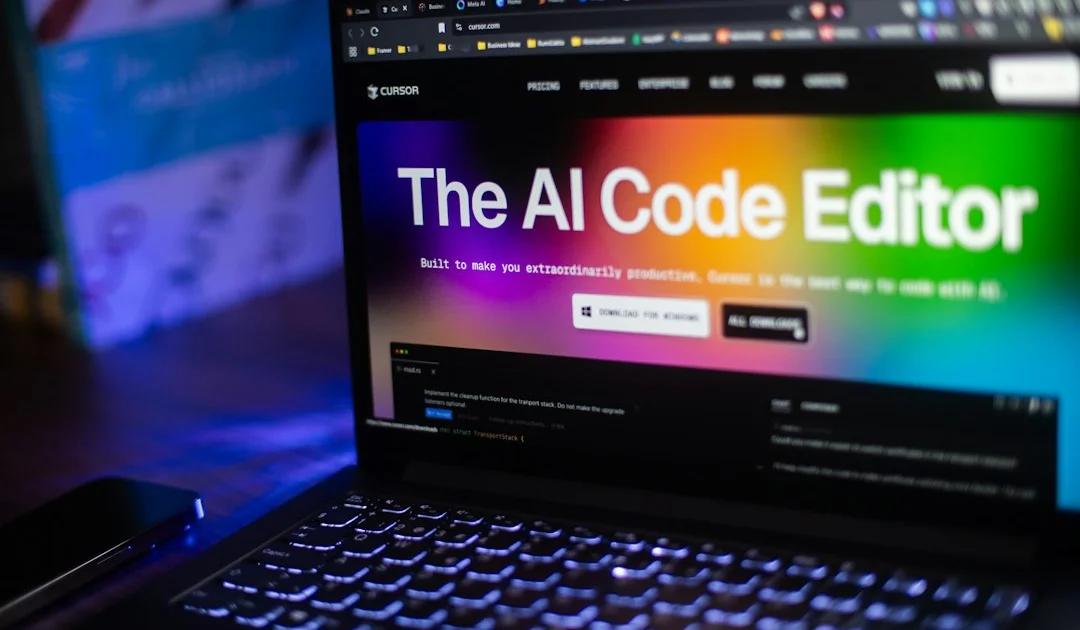
Imagine building a fully functional website in less time than it takes to brew your morning coffee. This isn't a futuristic dream; it's the reality ushered in by AI website builders in 2026. The market is exploding, small businesses are adopting these tools at record rates, and the promise of a 15-minute launch is very real. But here's the catch: the notion of 'truly autonomous' creation remains largely a misnomer. While AI can generate impressive drafts with unprecedented speed, the reality is that human expertise and oversight are more critical than ever, especially with the rise of 'agentic AI'.
This evolving landscape isn't about AI replacing human web development. It's about a powerful collaboration where AI augments, enhances, and accelerates, but the human element provides the crucial judgment, creativity, and strategic direction.
The AI Website Builder Boom: Numbers Don't Lie
The growth of AI website builders is nothing short of phenomenal. The global AI website builder market, valued at approximately $2.69 billion in 2025, is projected to hit an estimated $3.24 billion in 2026. Experts at Precedence Research and Hostinger, in February and May 2026 respectively, forecast a remarkable expansion to $17.43 billion by 2035, growing at a compound annual growth rate (CAGR) of 20.55%. This surge isn't isolated; it's part of a broader increase in worldwide AI spending, expected to reach $2.52 trillion in 2026, marking a significant 44% year-over-year increase, according to Hostinger and Yacss in May and June 2026.
Small businesses are leading this charge. As of 2026, 58% of small businesses now use generative AI, a substantial leap from just 23% in 2023. This points to a clear trend: AI is democratizing web presence. Platforms like Hostinger AI Builder report that an astonishing 93, 95% of their users are first-time website builders, proving that AI is breaking down barriers for those without prior experience (Hostinger, May 2026). Furthermore, a robust 67.39% of business owners now prefer AI website builders over traditional development, as noted by Yacss in June 2026.
This sector is also a cornerstone of the larger low-code movement. The global low-code market will reach $101.7 billion by 2030, and by 2026, low-code platforms are expected to power 75% of all new applications. A striking 80% of people using low-code will be outside IT departments by 2026, according to Hostinger in September 2026. This trend reinforces the accessibility and power AI builders offer to non-technical users.
Beyond Generative: The Rise of Agentic AI in Web Design
While generative AI captivated us with its ability to create content from prompts, the real game-changer in 2026 is agentic AI. This isn't just about generating text or images; it's about systems that can understand a goal, plan a series of actions, execute them, and then review the results. Agentic AI operates in a sophisticated plan-action-review loop, inherently requiring human oversight for true quality and functionality.
Agentic AI development means building systems that plan, decide, and carry out multi-step tasks with limited human intervention, a clear distinction from generative AI tools that simply respond to prompts (AVIXA Xchange, July 2026). Most production-grade agents combine a reasoning layer, often powered by a Large Language Model (LLM), with memory to retain context, tool and API access for real-world interactions, and an orchestration layer to coordinate multiple actions. This allows them to perform complex tasks that go far beyond simple generation.
We're already seeing this in action. Elementor, which powers over 21 million websites, introduced "Angie" in July 2026, an agentic AI operating on the Model Context Protocol. Angie takes direct action inside the dashboard to build components, moving beyond static code generation to active site construction. Similarly, Replit Agent, highlighted by MachineLearningMastery.com in January 2026, is an advanced AI tool that transforms natural language into fully functional applications. It manages environment setup, database structuring, and dependency management. Its "Max Autonomy" feature allows it to tackle extended tasks and even test apps by simulating user navigation to detect and fix issues.
Gartner projects that agentic AI could drive 30% of enterprise application software revenue by 2035, a significant jump from 2% in 2025, signaling a decade-long growth curve for these AI-native tools (Hostinger, May 2026). While Capgemini reports that only 2% of organizations have deployed AI agents at scale as of March 2026, with 23% running pilots, this adoption is set to accelerate rapidly (AVIXA Xchange, July 2026). By 2028, more than one-third of organizations will have AI agents working as members of human-supervised teams.
The 15-Minute Launch: Speed, Efficiency, and Real-World Examples
The speed and efficiency gains from AI website builders are undeniable. AI tools cut the wireframing and design phase by a remarkable 60-80%, turning weeks of work into mere minutes, as noted by Elementor in July 2026. AI coding assistants boost developer efficiency, completing technical tasks 55% faster than manual coding. Developers report 55% faster task completion and 75% less frustration when using these tools, according to Buildez Blog in September 2026.
The impact extends to code generation itself. By early 2026, approximately 30% of all new code on GitHub is AI-generated, with tools like GitHub Copilot generating 46% of the code in files where it's enabled (Buildez Blog, September 2026). For designers, the benefits are equally clear: 91% say AI has improved their work quality, 89% work faster, and 25% report higher job satisfaction, according to Orbix Studio in September 2026.
AI also enhances core website performance and user experience. AI-optimized code improves Core Web Vitals scores by an average of 15 points, and dynamic layout personalization can drive a 15-20% increase in conversion rates, as reported by Elementor in July 2026. These are not just aesthetic improvements; they translate directly to better business outcomes.
Leading AI website builders are making this rapid creation a reality:
- Wix AI Website Builder: This platform has replaced its older ADI system, now using a smart chatbot interface to generate unique, multi-page website drafts based on user descriptions. Users can then fully edit these drafts with Wix's classic editor (LandingHero.ai, 2026).
- Hostinger AI Builder: Praised for its affordability and simplicity, it can generate a complete site, including copy, contact forms, and galleries, in under a minute (beehiiv Blog, November 2025).
- Durable: Known for its speed, Durable's AI builder can generate a one-page website with AI-generated content based on just a business name and type (beehiiv Blog, November 2025).
- Framer AI: Often recommended for designers, Framer focuses on providing significant design control alongside AI convenience, generating layouts and sections (Prox Digital Agency, April 2026).
- AccuWeb Atlas: Identified as a top pick for 2026, it offers genuine AI site generation, bundling hosting, security, and support from day one (Prox Digital Agency, April 2026).
- GoDaddy Airo: A newer offering, GoDaddy Airo provides free starting credits for AI generation, with paid plans for publishing and removing limits (GoDaddy Airo, August 2026).
- Shopify Magic: A suite of AI tools tailored for e-commerce, assisting with product descriptions, marketing content generation, and offering dynamic product displays that adapt to user behavior.
These examples underscore the dramatic shift towards rapid, AI-assisted web creation, making it easier than ever to get an online presence up and running.
The Unseen Cost: Why "Autonomous" Still Needs Human Eyes
Despite the incredible speed and capability, the term "autonomous creation" is largely a misnomer, as Webfries pointed out in 2025. While AI can draft, generate, and even take action, true autonomy, especially for a high-quality, effective website, remains elusive. The human-in-the-loop paradigm is not just a preference; it's a necessity for quality and functionality.
Consider the data: AI-generated code, while fast, can carry roughly 1.7 times more issues than human-written code. Additionally, code churn has jumped a concerning 39% in AI-heavy projects, according to Buildez Blog in September 2026. These statistics underscore the critical need for human review. Experts consistently emphasize that AI should serve as a co-pilot, augmenting developers rather than replacing them. Its output should always be treated as a draft, not a final deliverable.
The concept of "human oversight-by-design" is gaining traction. This means embedding human judgment across the entire development pipeline through escalation policies and explicit UI controls for risk signaling and intervention (arXiv, February 2026). It's about designing systems where human input isn't an afterthought, but an integral part of ensuring quality, accuracy, and ethical alignment.
The real risk isn't AI itself, but how teams integrate it into their workflows. As Orbix Studio highlighted in September 2026, the danger lies with teams that lack a clear workflow around AI, or designers who let AI make critical creative decisions instead of using it to produce options for human refinement. The human touch provides the nuance, the brand voice, the strategic alignment, and the error-checking that AI, despite its advancements, still cannot fully replicate.
The Evolving Role: Humans as Co-Pilots, Not Passengers
The rise of AI website builders fundamentally reshapes the roles of web designers and developers. It's a transition from manual execution to strategic oversight. Human expertise will shift towards prompt engineering, ethical AI implementation, user experience refinement, and ensuring brand consistency. The demand for human strategic thinking, creativity, ethical oversight, and the ability to effectively collaborate with AI tools is increasing significantly (Medium, May 2026; Orbix Studio, September 2026).
Agentic AI will become a standard collaborator, automating repetitive tasks like initial layout generation, content drafting, and basic SEO optimization. This frees human designers to concentrate on higher-value activities such as complex problem-solving, making nuanced design decisions, and ensuring the site truly resonates with the target audience. The transition to AI-driven web creation isn't about replacing developers; it's about eliminating friction and empowering more people to build, as Elementor noted in July 2026.
This shift will also create new skill demands. The industry will likely see a widening "AI-skills gap," emphasizing the need for designers and developers to learn how to effectively work with and manage AI tools. By 2028, more than one-third of organizations will have AI agents working as members of human-supervised teams, according to AVIXA Xchange in July 2026. This isn't just a prediction; it's an imperative for future readiness.
Platforms like TashiOS exemplify this evolving partnership. By allowing users to describe their ideas in plain English to build real apps, websites, online stores, and Android apps, TashiOS empowers a wider audience. However, even with such advanced AI, the user's vision, strategic input, and final review are paramount to create something truly impactful and aligned with their business goals. The AI handles the heavy lifting of code and design generation, but the human provides the soul and direction.
What's Next for AI Web Creation? Predictions for 2026 and Beyond
Looking ahead, several key trends will define the future of AI-driven web creation, extending far beyond the initial 15-minute launch:
- Hyper-Personalization as the Default: AI-powered personalization is becoming the default expectation. Websites will dynamically adapt layouts, content, and navigation in real time based on individual user behavior, device context, and preferences. WuPiLab and Webomindapps, in November 2025, highlighted this as a crucial development for future web experiences.
- Multimodal and Voice-First Interfaces: By 2026, voice navigation, conversational user interfaces, and intelligent chatbots are slated to become standard on high-performing sites. This expands web experiences beyond traditional clicks and scrolls, making interaction more intuitive and accessible (WuPiLab, Webomindapps, November 2025).
- AI as a Co-Designer and Generative Design: The future of web design will be driven by AI co-designers. Generative design will allow for faster experimentation and testing of countless design variations, freeing human designers to focus on creative, human-centric processes (Webomindapps, November 2025; Orbix Studio, September 2026).
- Proactive Accessibility Enhancements: AI tools will proactively enhance website accessibility. This includes automating checks for WCAG compliance, generating accurate alt text for images, and adjusting contrast ratios. While AI can greatly assist, human review will remain vital for nuanced issues and true inclusive design.
- Ethical Considerations and Human Judgment: As AI becomes more sophisticated, so too does the need for ethical oversight. Ensuring AI-generated content is unbiased, factually accurate, and aligns with societal values will require continuous human judgment and intervention. The rapid generation of content comes with the responsibility of rigorous human review to catch errors, biases, and ensure factual consistency.
The "15-minute launch era" is here, and it's transformative. It signifies a massive reduction in the barrier to entry for creating an online presence. However, the true value and quality of these rapidly generated sites still heavily depend on human intervention. The current and future landscape is defined by agentic AI working in concert with human intelligence, where the speed of AI is balanced by the critical judgment, creativity, and ethical oversight of human experts. The 15-minute launch is a powerful starting point, but the journey to a truly effective and high-quality online presence still requires a human hand at the helm.
Ready to bring your business ideas to life with the power of AI and your unique vision? Explore TashiOS today. Describe your app or website in plain English and start building for free with AI credits. Launch your online business without code and see what you can create when AI is your co-pilot.