
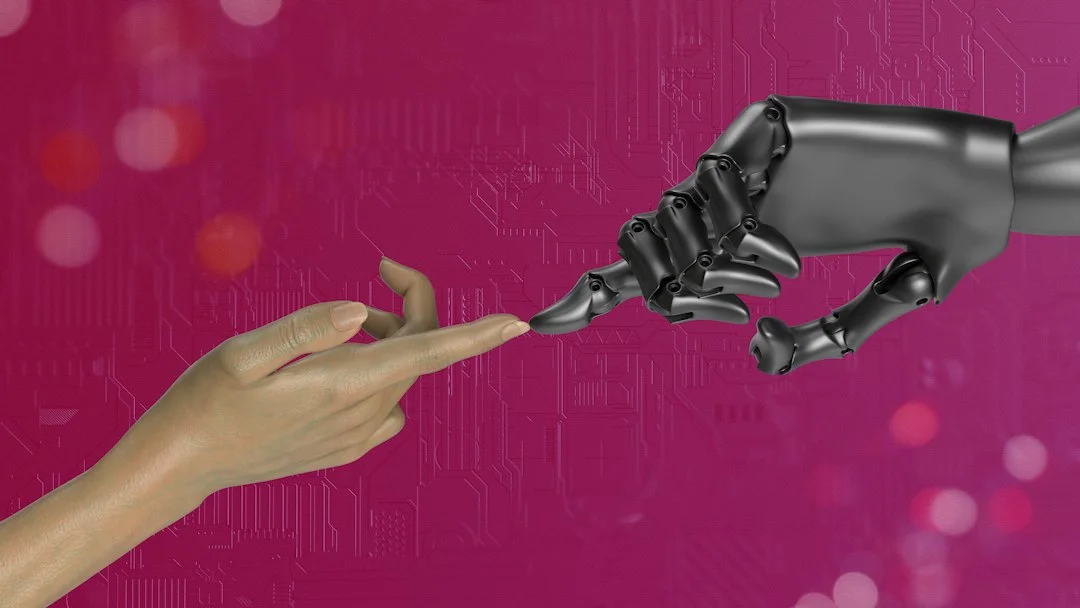
Imagine a world where AI doesn't just answer your questions, but actively takes on your most complex tasks, planning and executing them on its own. That world isn't just coming; it's already here in November 2026. The shift from AI as a mere assistant to an autonomous agent is arguably the biggest story in technology right now, redefining how we work, innovate, and interact with the digital world.
The numbers behind this transformation are staggering. According to Fortune Business Insights, the global AI market is projected to reach USD 375.93 billion in 2026. Other estimates push that figure even higher, with Precedence Research suggesting it could hit USD 900 billion. This isn't just growth; it's an explosion, setting the stage for a USD 9,526.0 billion market by 2035 with a Compound Annual Growth Rate (CAGR) of 37.7% from 2027 to 2035. The future of AI is not just bright; it's blindingly brilliant.
The AI Market Explodes: Numbers You Won't Believe
The sheer scale of AI's expansion in 2026 is hard to overstate. We're seeing unprecedented investment and adoption across every sector. Global AI investment is projected to exceed USD 1 trillion this year, with a significant USD 581 billion poured into the U.S. alone. Morgan Stanley Research takes this even further, estimating nearly USD 3 trillion in AI-related infrastructure investment globally by 2028. This isn't speculative spending; it's a foundational build-out for the next generation of technology.
Enterprises are leading the charge. Nearly 90% of organizations reported using AI in at least one business function in 2025, a substantial jump from 78% just a year prior. By Q2 2026, almost 19% of the world's working-age population was using generative AI, according to the 2026 Stanford AI Index Report. This widespread adoption shows AI isn't a niche tool; it's becoming an everyday part of global productivity.
Breaking down the market, the software segment holds the largest share, accounting for 33.4% of revenue in 2026, while deep learning continues to dominate by technology. Healthcare is another major player, driven by the urgent need to enhance diagnostics and patient care. Looking ahead, the automotive and transportation segments are expected to exhibit the fastest CAGR from 2027 to 2035, promising smart vehicles and optimized logistics.
The infrastructure supporting this growth is also scaling rapidly. Global AI computing capacity has grown 3.3 times per year since 2022, a remarkable pace. IDC projects USD 497 billion in AI infrastructure spending in 2026. This massive investment in computing power is what makes the advanced AI capabilities we're seeing today possible, powering everything from complex models to autonomous agents.
From Tools to Partners: AI's Deep Business Integration
The conversation around AI has dramatically changed. It's no longer about simple automation or data analysis. Instead, AI is evolving into an active partner, deeply integrated into core business infrastructure. This isn't just about efficiency; it's about driving innovation and fundamentally reshaping human-AI collaboration.
Generative AI, in particular, has seen explosive growth. Worldwide end-user spending on AI models and platforms is projected to reach USD 64 billion in 2026, marking a 63.4% increase from USD 39 billion in 2025. Spending on Generative AI models alone is forecast to grow by an astounding 117% in 2026. This rapid expansion highlights the value businesses find in AI that can create, design, and innovate.
This shift means businesses are not just using AI, but building with it. Platforms like TashiOS exemplify this trend, allowing individuals and businesses to describe their ideas in plain English and build real apps, websites, online stores, and Android apps with no code. This democratization of AI-powered development is crucial for widespread integration, empowering anyone to become a creator.
The impact is visible across industries. From personalized customer experiences to optimized supply chains, AI is becoming indispensable. It's helping companies make smarter decisions, develop new products faster, and provide services that were unimaginable just a few years ago. This deep integration is creating a competitive advantage for those who embrace it fully.
The Agent Revolution: AI That Thinks and Acts
If there's one trend defining November 2026, it's the rise of autonomous AI agents. We've moved beyond conversational chatbots. These new systems are designed to reason, plan complex multi-step tasks, execute them, and even self-correct without constant human intervention. They're not just responding to prompts; they're taking initiative.
Experts like Mean CEO Violetta Bonenkamp observe that small teams using AI agents can now outpace larger, better-funded rivals in research and specialist work. This is a profound shift, leveling the playing field and accelerating innovation for agile organizations. The ability for AI to autonomously pursue goals changes the very nature of project execution.
Real-world examples already showcase this power. Danfoss, for instance, reportedly reduced customer response times from 42 hours to nearly instant by automating 80% of transactional decisions using AI agents. This isn't just about speed; it's about freeing up human talent to focus on more complex, high-value interactions, while agents handle the routine with precision and efficiency.
These agents represent a fundamental evolution in AI's capabilities. They embody a future where AI can independently navigate complex problems, learn from outcomes, and adapt its strategies. This opens up possibilities for fully automated business processes, advanced scientific discovery, and even more sophisticated creative endeavors. It's AI moving from a reactive tool to a proactive partner.
Beyond Business: AI's Impact on Science and Society
AI's influence extends far beyond the corporate world, making significant strides in scientific discovery and broader societal applications. In November 2026, AI is actively joining the process of discovery in physics, chemistry, and biology, generating hypotheses and accelerating research cycles. This collaboration is pushing the boundaries of human knowledge at an unprecedented pace.
For example, AI is now capable of sifting through vast datasets of scientific literature and experimental results, identifying patterns and connections that human researchers might miss. It can propose novel molecular structures, predict material properties, or even design new experiments, significantly shortening the path from idea to breakthrough. This partnership between human ingenuity and AI's analytical power is creating a new era of scientific exploration.
In society, AI is transforming everything from healthcare to education. Its ability to personalize learning experiences, improve diagnostic accuracy, and even help manage urban infrastructure shows its potential for widespread positive impact. However, this deep integration also raises important questions about ethics, data privacy, and the future of work, which communities and policymakers are actively addressing.
The expansion of AI into these critical areas underscores its role as a fundamental technology for human progress. As autonomous agents become more sophisticated, their capacity to contribute to complex societal challenges, from climate change to disease eradication, will only grow. It's a powerful reminder that the future of AI is intertwined with the future of humanity itself.
No-Code AI: Building the Future with TashiOS
The rapid advancements in AI, especially with autonomous agents, might seem daunting to someone without a background in coding. However, a significant part of the current AI revolution is its increasing accessibility. No-code AI platforms are democratizing the ability to build and innovate, putting powerful AI tools into the hands of entrepreneurs, small businesses, and creative individuals.
This is where platforms like TashiOS make a real difference. TashiOS is an AI-powered operating system designed to help you build apps, websites, and start your own online businesses with no code. You simply describe your ideas in plain English, and the AI takes over, generating functional digital products. This approach removes the technical barriers that once limited innovation to those with specialized coding skills.
Imagine wanting to launch an online store or a custom app for your business. In the past, this meant hiring developers, spending months on development, and significant financial investment. With TashiOS, you can articulate your vision, and the platform's AI builds the application for you. This dramatically reduces time to market and costs, empowering a new generation of digital entrepreneurs.
The rise of no-code AI tools is crucial for ensuring that the benefits of the AI revolution are broadly distributed. It means that brilliant ideas aren't held back by a lack of technical expertise. Instead, anyone with a clear vision can use TashiOS to bring their digital products to life, leveraging the power of AI to compete and succeed in an increasingly digital world.
What's Next for AI? Bold Predictions for Tomorrow
Looking beyond November 2026, the trajectory of AI suggests even more profound changes are on the horizon. We can expect autonomous agents to become even more sophisticated, capable of handling broader scopes of work with minimal oversight. This will likely lead to a redefinition of many job roles, with humans focusing on strategic oversight, creativity, and complex problem-solving that AI cannot yet replicate.
We'll also see further convergence of AI with other emerging technologies, such as quantum computing and advanced robotics. This will unlock capabilities currently confined to science fiction, like highly complex simulations, truly intelligent physical robots, and AI systems with even more advanced reasoning abilities. The integration of AI into every facet of our physical and digital lives will only deepen.
A contrarian viewpoint might suggest that the rapid pace of AI development could outstrip our ability to govern it ethically. While significant progress is being made in AI safety and regulation, the speed at which autonomous agents are evolving demands constant vigilance and proactive policy development. Ensuring AI serves humanity's best interests will remain a critical challenge.
Despite these challenges, the overwhelming consensus points to a future where AI is an indispensable partner in driving human progress. The sheer volume of investment, the rapid rate of adoption, and the breakthrough capabilities of agentic AI all indicate that we are just at the beginning of a transformative era. The future of AI promises a world of unprecedented innovation, efficiency, and possibility.
Ready to build your part of the future? Explore the possibilities with TashiOS. Start for free with AI credits and turn your ideas into working apps and websites today.