
Forget everything you thought you knew about building software. By 2026, Gartner forecasts that over 75% of new enterprise applications will be built without traditional coding. This isn't a gradual shift; it's a seismic event. The world of simple drag-and-drop interfaces is gone, replaced by a new era where artificial intelligence is not just a feature, but the primary creative force. If you're not paying attention, you're already falling behind.
AI Isn't Just Helping Anymore, It's Co-Creating
For years, AI in no-code tools felt like a helpful assistant, suggesting minor improvements or automating simple tasks. That's ancient history now. In 2026, AI has become a true co-creator, an active partner in the development process. The biggest development is the rise of "prompt-based tools."
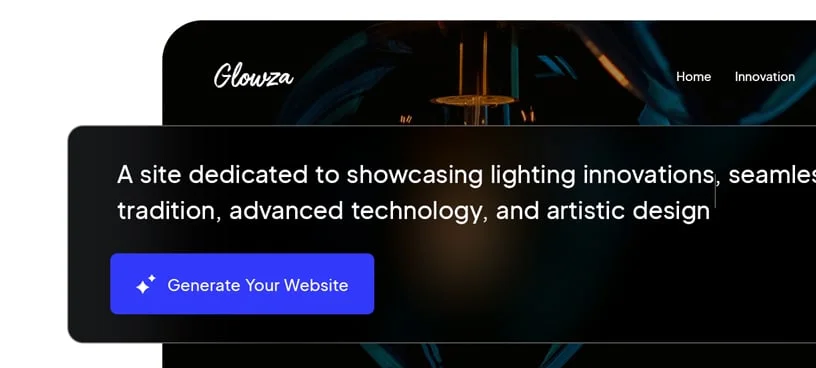
Instead of meticulously arranging elements on a canvas, you now describe what you want in plain English. You can say, "Build me a project management app with a kanban board, task assignments, and a dashboard for reporting," and the AI generates a functional prototype in minutes. Platforms like Adalo have embraced this, allowing users to generate mobile apps just by describing them.
This concept has been dubbed "vibe coding" by Replit CEO Amjad Masad. It’s the idea that you provide the vision, the "vibe," and the AI handles the complex execution. This is precisely the philosophy behind platforms like BuildEZ.ai where a simple prompt is all that's needed to generate a complete, production-ready website. The AI doesn't just give you a template; it reasons about your business needs and builds a unique digital presence from the ground up.
Microsoft's Power Platform has seen massive success with its Copilot, which uses natural language to create apps and has been shown to reduce development cycles by 40-50%. This isn't about making building easier; it's about fundamentally changing who can build and how fast they can do it.
The Enterprise Has Fully Embraced No-Code Tools
The days of no-code being a tool for small side projects are long gone. Today, it's a cornerstone of enterprise strategy. Recent data shows that 95% of companies used low-code or no-code (LCNC) tools in the last year, and an incredible 78% of Fortune 500 companies now deploy these platforms for mission-critical systems.
Why the sudden, complete adoption? It’s a perfect storm of factors. Businesses are under immense pressure to accelerate digital transformation, there's a persistent shortage of skilled developers, and the demand for new applications is growing, as Codewave reports, five times faster than IT departments can deliver.
Modern no-code platforms have risen to the occasion. They now come equipped with robust security and governance features, earning critical compliance certifications like SOC 2 and HIPAA. They also offer a huge library of enterprise integration connectors, allowing them to work smoothly alongside complex legacy systems. This maturity has made them a safe and powerful choice for serious business applications.
The financial impact is staggering. Organizations report an average annual saving of $187,000, with some projects seeing development costs cut by as much as 74%, according to data on Microsoft Power Apps. With an ROI that can exceed 500%, the question for enterprise leaders is no longer *if* they should adopt no-code, but how deeply they can integrate it.
Jaw-Dropping Market Growth: The Numbers Don't Lie
The statistics behind the no-code movement are almost hard to believe, painting a picture of explosive, unstoppable growth. This isn't a niche market; it's rapidly becoming *the* market for software development.
Let's look at the core numbers. The Business Research Company valued the no-code development platforms market at $35.61 billion in 2025. This year, it's projected to hit $45.24 billion. That's a compound annual growth rate (CAGR) of 27.1%. By 2030, analysts expect the market to surpass $102 billion.
The AI-specific segment is growing even faster. The no-code AI platform market, valued at $6.56 billion in 2025, is on track to reach $8.6 billion in 2026. Projections from Intel Market Research suggest it could soar to over $75 billion by 2034, showing a blistering CAGR of 31.13%.
These aren't just abstract figures. They represent a fundamental change in how economic value is created with software. By 2026, over 500 million new applications are projected to be created using no-code platforms. This scale of creation was unimaginable just a few years ago, and it's being driven by a new class of builders.
The Rise of the "Citizen Developer" is Reshaping IT
One of the most profound impacts of no-code tools is the empowerment of the "citizen developer." These are business users, like marketers, project managers, and HR specialists, who have deep domain expertise but no formal coding skills. They can now build the exact tools they need to solve their own problems, without waiting in a long IT queue.
By the end of 2026, it's predicted that these non-technical builders will make up 80% of all no-code users. They're not replacing professional developers; they're augmenting them. They handle departmental needs and build internal tools, freeing up IT to focus on the most complex, high-level architectural challenges.
However, this doesn't mean technical skills are becoming obsolete. It's a shift in what skills matter. As Shweta Mishra of TechNova World points out, while AI can generate code, understanding the underlying logic is still crucial for building performant and scalable applications. The role of the builder is evolving from a "coder" to an "editor" or an "orchestrator," someone who can guide the AI, structure the logic, and ensure the final product is sound.
This creates a hybrid future. The most effective teams will blend the speed of no-code with the power of traditional coding, using the best approach for each part of a project.
Beyond Apps: The New Frontier of Autonomous AI Agents
If prompt-to-app is the present, then autonomous AI agents are the immediate future. We are moving beyond simple workflow automation, like a Zapier task that triggers when you receive an email. The next wave is about creating AI agents that can reason, make decisions, and operate continuously on your behalf.
New platforms are emerging to define this category. Latenode, for example, is combining a visual no-code interface with native AI access, allowing users to build autonomous agents for complex jobs like customer support. Imagine an agent that can understand a customer's problem, query a database for their order history, reason about the best solution, and initiate a refund, all without human intervention.
Data-centric platforms like Airtable are also becoming central to this trend. They provide the structured data that AI agents need to operate effectively, acting as the brain and memory for these autonomous systems. This moves no-code from a tool for building interfaces to a platform for building intelligence.
What This AI-Powered No-Code Shift Means for You
This transformation has practical implications for everyone, from solo founders to enterprise executives. The barrier between having an idea and launching a functional digital product is becoming vanishingly thin. As building becomes easier, the competitive advantage shifts.
It's no longer about who has the biggest development team. It's about who has the clearest vision. The most valuable skill is no longer writing perfect syntax, but the ability to identify a critical problem and clearly describe a solution that delivers real value. The focus moves from the complexity of the interface to the effectiveness of the outcome.
Companies that embrace this hybrid, AI-first approach will gain a massive edge in speed, cost-efficiency, and business agility. They can test ideas, launch products, and iterate faster than ever before. Platforms like BuildEZ.ai exemplify this shift, allowing businesses to focus on their unique value proposition while the AI handles the technical complexities of building a world-class website.
The line between creator and consumer of technology is blurring. AI-powered no-code tools are putting the power to build in the hands of the people with the problems. This isn't just another trend; it's the new foundation of digital innovation.
This new era of creation is what we're building for at BuildEZ.ai. The ability to go from a simple idea to a fully functional, production-ready website is no longer a dream. If you're ready to see what AI-powered building truly feels like and turn your vision into reality without writing a single line of code, the tools are finally here.