Imagine building a fully functional, enterprise-grade application in weeks, not months. Now imagine doing it with natural language, simply by describing what you want. This isn't a futuristic fantasy, it's the reality of no-code tools in July 2026. The market is exploding, valued at a staggering $65 billion this year, and AI isn't just a feature, it's the creative engine powering this transformation. It's a fundamental shift, empowering a new wave of citizen developers to build what was once exclusive to coding experts.
The AI Co-Creator Revolution: Beyond Drag-and-Drop
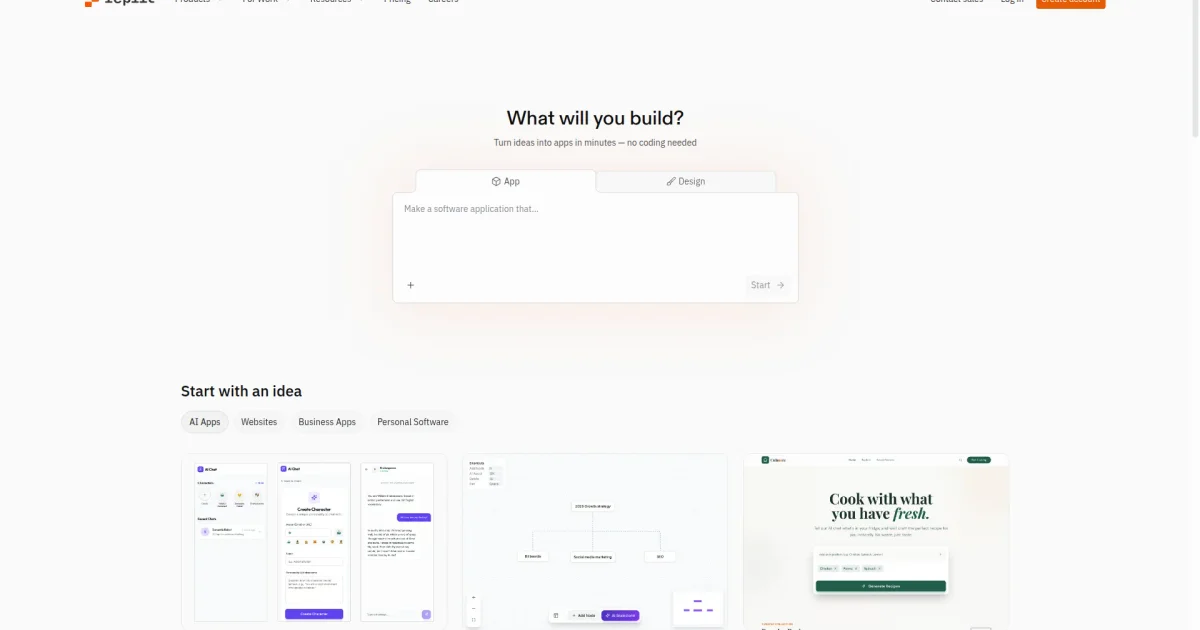
The biggest story in no-code development for 2026 is the widespread integration of Artificial Intelligence. AI has moved beyond being a simple helper; it's now a true co-creator in the application development process. We're seeing a leap from traditional drag-and-drop interfaces to what's being called "natural language building" or "vibe coding."
This means you can prompt an AI to generate entire app foundations. Think layouts, content, underlying architecture, database schemas, and frontend components, all from a simple description. For example, Bubble, a leading platform for complex web applications, has rolled out an AI-powered "Co-pilot" that helps scaffold page layouts and logic flows from prompts. Similarly, FlutterFlow, a top choice for native mobile apps, introduced "DreamFlow AI" to create UI layouts from natural language input. Even platforms like Webflow are using AI tools for generating layouts and content, making website creation incredibly intuitive.
However, this rapid advancement comes with its own nuances. Jason Bloomberg, Managing Director at Intellyx BV, points out that while generative AI is everywhere, companies are now confronting the limitations of "vibe coding." This includes issues like hallucinations, where the AI generates plausible but incorrect or irrelevant outputs. Organizations need to choose between deterministic and non-deterministic functionality, understanding when to let AI take the reins and when to provide more structured guidance. This highlights a crucial point: AI makes governed no-code faster, it doesn't replace the need for thoughtful design and oversight.
No-Code's Unstoppable Market Growth and Enterprise Dominance
The numbers don't lie. No-code and low-code are no longer niche trends; they're the default approach for most new business applications. Gartner predicts that 70% of new enterprise applications will use low-code or no-code technologies by the end of 2026. This is a dramatic increase from less than 25% just a few years ago in 2020.
The global no-code and low-code development platform market is valued at $65 billion in 2026, according to research from various sources. The no-code segment alone is expected to grow from $35.61 billion in 2025 to $45.24 billion in 2026, showing a Compound Annual Growth Rate (CAGR) of 27.1%. Enterprise adoption is soaring, with 77% of enterprises now using or planning to use these tools. Fortune 500 companies alone showed 38% adoption of no-code solutions as of 2026.
Why this explosive growth? Organizations report up to a 90% reduction in development time, compressing months of work into weeks or even days. This translates to an average 62% reduction in development costs compared to traditional custom coding, with average annual savings of $187,000 per organization. ROI is typically realized within 6-12 months, making no-code platforms financially compelling for businesses of all sizes.
Citizen Developers: The New Majority in Tech
One of the most profound implications of the no-code revolution is the rise of the citizen developer. By 2026, citizen developers are projected to outnumber professional developers by a ratio of 4:1 in large enterprises. Furthermore, developers outside formal IT departments are expected to account for at least 80% of the user base for low-code development tools, as reported by Gartner.
These are the "business technologists" a significant 41% of employees outside IT who are now building technology solutions for business use. No-code tools are democratizing development, allowing individuals with deep business knowledge but no coding background to create powerful applications. This reduces reliance on scarce technical talent and significantly accelerates digital transformation across organizations.
This shift doesn't mean professional developers are obsolete. Instead, no-code shifts the threshold for what requires custom code. IT teams can now focus on more complex, strategic projects, architectural design, security, and deep integrations, leaving routine application development to empowered business users. It's a collaboration, not a replacement.
Platform Powerhouses: What's New in 2026
The no-code ecosystem is vibrant, with platforms constantly evolving. Here's what some of the key players are doing:
- Bubble: As mentioned, its AI-powered "Co-pilot" and native app exports for iOS and Android are making it even more versatile for scalable web and mobile applications.
- Webflow: It continues to dominate for marketing websites and e-commerce, with new AI tools for generating layouts and content from prompts. This makes creating stunning, responsive websites faster than ever.
- SAP Build: SAP's unified low-code/no-code suite introduced "Joule Studio" in 2026, an AI-native development environment within SAP Build. This helps teams create AI agents grounded in SAP business context, showing a strong move towards enterprise-specific AI integration.
- FlutterFlow: With "DreamFlow AI" for UI layouts and robust native mobile app support, FlutterFlow is a go-to for iOS and Android app development.
- Enterprise Leaders: OutSystems, Mendix, and Appian remain strong, with OutSystems focusing on "agentic app development" through features like Mentor for AI-assisted generation and Agent Workbench for managing AI agent lifecycles.
- Automation & Databases: Zapier and Make (formerly Integromat) continue to dominate workflow automation, connecting thousands of apps. Airtable remains best for database-powered apps, often paired with other no-code tools for comprehensive data management.
- Internal Tools & Compliant Apps: Glide excels at building internal tools and mobile apps from spreadsheets, with Glide AI offering text extraction, image analysis, and sentiment scoring. Caspio.com stands out as a governed no-code platform running compliant applications at scale.
The trend is clear: platforms are consolidating "full-stack no-code" functionalities to reduce tool sprawl. This means offering frontend, backend, and automation capabilities within a single, integrated environment. For instance, services like Xano are becoming essential for scalable no-code backends, allowing platforms to focus on their core strengths while providing robust infrastructure.
The Future is Agent-First: Practical Implications and Predictions
The practical implications of these developments are profound. Businesses can launch AI-powered workflows and applications in days or weeks, significantly improving agility. This allows them to respond to market demands with unprecedented speed. For businesses needing to launch quickly and efficiently, platforms like BuildEZ.ai offer a streamlined path to a production-ready web presence, letting you describe your vision in natural language and watch your website come to life.
Looking ahead, we predict even deeper AI integration. No-code AI platforms will evolve with stronger governance features, broader integrations, and AI-assisted development. This includes the rise of AI agents that can understand natural language and execute multi-step workflows autonomously. We'll see "agent-first" workflows become the norm, with AI agents replacing interfaces before they replace apps, especially for internal coordination tasks.
The distinction between no-code and low-code will continue to blur. Most platforms will offer both visual simplicity for business users and options for custom code when professional developers need more flexibility and scalability. As enterprise adoption grows, expect increased governance and security features, with platforms offering clearer policies, monitoring tools, and access controls to match traditional development standards.
The role of a founder is also shifting. Instead of being primarily a builder, founders are becoming editors. Their focus is on discerning which problems truly matter and which systems will endure, rather than getting bogged down in the mechanics of building. This enables faster iteration and strategic decision-making.
Contrarian View: The Challenge of AI's Non-Determinism
While the promise of AI co-creation is immense, it's vital to acknowledge the challenges. The very nature of generative AI can introduce non-deterministic outcomes. "Vibe coding" might accelerate initial builds, but it can also lead to unexpected results or "hallucinations" that require careful human review and refinement. This isn't a flaw, but a characteristic that demands a nuanced approach to development.
For mission-critical enterprise applications, a balance must be struck. Deterministic functionality, where outcomes are predictable and repeatable, remains crucial. No-code platforms that offer robust governance and the ability to inject low-code for specific, controlled components will be key. This hybrid approach ensures both speed and reliability, preventing the uncontrolled sprawl of potentially faulty AI-generated solutions.
Ultimately, the best no-code solutions will be those that empower users with AI while providing guardrails and tools for professional oversight. It’s about making development faster and more accessible, not about relinquishing control entirely. Platforms like BuildEZ.ai understand this balance, providing powerful AI-driven website creation while ensuring users retain full control and the ability to refine their vision.
The no-code revolution, supercharged by AI, is here to stay. It's transforming how businesses operate, innovate, and compete. Don't get left behind. Explore how BuildEZ.ai can help you quickly launch your next AI-powered website.