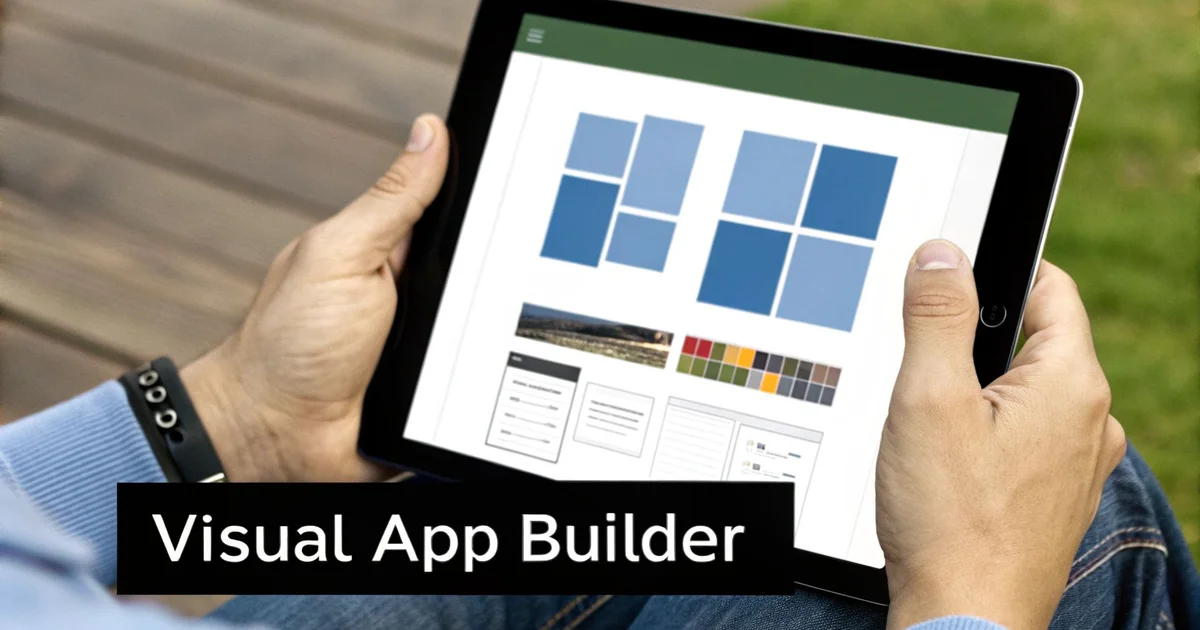
Imagine building a complex business application in days, not months. Picture a world where your brightest ideas aren't bottlenecked by coding cycles or IT backlogs. This isn't a futuristic fantasy; it's the reality of August 2026, where no-code tools, deeply integrated with artificial intelligence, have fundamentally reshaped application development.
The numbers speak volumes. Gartner forecasts the low-code development technologies market to exceed an astounding $30 billion in 2026 alone. Other estimates place the broader no-code development platforms market at $45.24 billion this year, growing at a compound annual growth rate (CAGR) of 27.1% (The Business Research Company). This isn't just growth; it's an explosion, signaling a permanent shift in how we create digital solutions.
The No-Code/AI Surge: A Market in Hyperdrive (2026)
The integration of AI into no-code tools isn't just a trend; it's the defining characteristic of this market in 2026. By mid-2026, 75% of mainstream low-code platforms have integrated AI capabilities, a dramatic increase from just 28% in 2024. This signifies AI's evolution from an experimental feature to a core component, making intelligent automation accessible to everyone.
Enterprises are leading this charge. Gartner predicts that 70% of new enterprise applications will use low-code or no-code technologies by 2026, a massive leap from less than 25% in 2020. Fortune 500 companies already show 38% adoption of no-code solutions, proving these platforms can handle mission-critical business requirements at scale (Fortune Business Insights). This widespread adoption isn't merely about efficiency; it's about competitive advantage.
The no-code AI platform market itself is a powerhouse. Valued at $6.56 billion in 2025, it is projected to reach $8.6 billion in 2026 and could hit $75.14 billion by 2034 at a staggering 31.13% CAGR (Fortune Business Insights). This segment's rapid expansion underscores the demand for intelligent, accessible automation.
The Rise of the Citizen Developer: Power to the People
Perhaps the most transformative aspect of this no-code revolution is the rise of the "citizen developer." These are employees outside formal IT departments who are now building sophisticated tech and analytics capabilities for their business units. Gartner reports that 41% of employees are "business technologists," actively creating solutions.
By the end of 2026, 80% of no-code users are expected to be outside formal IT departments. This means non-technical professionals are increasingly designing and deploying digital products and services, with over 65% using no-code tools. This democratization of application creation is a game-changer, empowering diverse teams to solve their own problems rapidly.
The impact on development speed and cost efficiency is undeniable. Organizations report up to a 90% reduction in development time, shrinking months of work into weeks or even days. This translates directly to substantial cost savings, with companies cutting development expenses by up to 70% using low-code. Average annual savings of $187,000 per organization, with payback periods of just 6-12 months, make these no-code tools financially compelling investments.
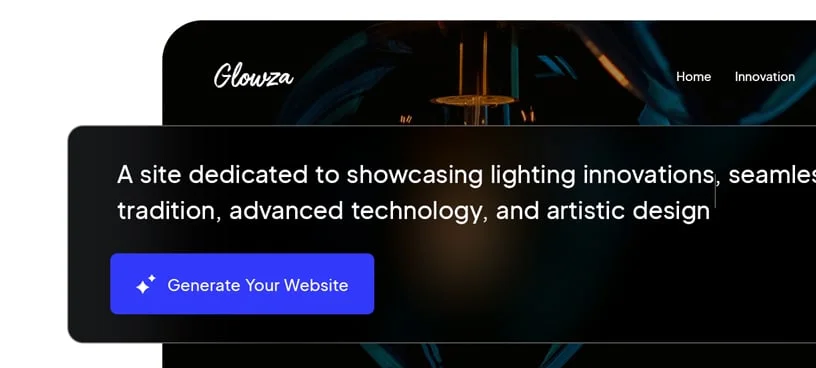
At platforms like TashiOS, this vision is already a reality. Users describe their ideas in plain English, and the AI-powered system generates real apps, websites, and even online stores. It's built for these citizen developers, enabling them to go live and start earning without writing any code. This shift, where citizen developers now outnumber professional developers 4:1 at large enterprises, signals a profound change in the tech workforce.
AI Isn't Just Integrated, It's the Backbone
In 2026, AI is no longer a bolt-on feature for no-code platforms; it's the very foundation. We're seeing AI-assisted development everywhere, helping users draft data models, generate UI screens, and automate repetitive logic. This intelligence makes the building process faster, smarter, and more intuitive for everyone.
The emergence of AI agents is another pivotal development. These agents can execute multi-step tasks, interpret unstructured data, and adapt workflows autonomously. The 2026 Gartner CIO and Technology Executive Survey reveals that 42% of enterprises expect to deploy AI agents this year, up from 17% in 2025. This shows a rapid acceleration in the adoption of truly intelligent automation.
Expert Jason Bloomberg from Intellyx notes that all vendors have added generative AI, allowing citizen developers to build apps through conversation (Intellyx). However, he wisely cautions about potential "hallucinations and non-deterministic behavior" where precision is critical. Successful vendors, he suggests, will simplify the choice between deterministic and non-deterministic functionality, ensuring reliability where it matters most.
Real-world examples abound. Adalo, a platform for native mobile apps, features an AI assistant named "Ada." Bubble, known for complex web apps, uses AI to generate page layouts and logic. Softr's AI app generator can scaffold working products from simple descriptions. On the enterprise front, SAP introduced "Joule Studio" within SAP Build in 2026, an AI-native development environment for creating AI agents grounded in SAP business context. OutSystems now focuses on agentic app development with "Mentor" for AI-assisted generation and "Agent Workbench" for managing AI agent lifecycles. Even CrewAI, initially a Python framework, now offers GUI tools for non-programmers to visually construct multi-agent systems.
Beyond the Hype: Real-World Impact and Enterprise Validation
The impact of no-code tools, especially when supercharged by AI, is evident in tangible business results. Ricoh, for example, achieved a remarkable 253% ROI with low-code adoption (integrate.io). AT&T built an internal data product in just 20 minutes that would have traditionally taken 6 weeks without AI. These aren't isolated incidents; they're proof of profound operational transformation.
Large enterprises are not just dabbling; they are deeply committed. Gartner predicts that 75% of large enterprises will employ at least four low-code tools by 2026. This reflects a strategic understanding that different platforms offer specialized strengths, allowing organizations to create a robust ecosystem of solutions. Microsoft Power Platform, SAP Build, OutSystems, and Mendix are all prominent players in this space, offering comprehensive suites for various enterprise needs.
The breadth of no-code tools available for diverse use cases is impressive. For general web and mobile app building, platforms like Bubble, Adalo, and Glide continue to lead. For automation and integration, Zapier and Make are indispensable, with Zapier now incorporating AI agents and a copilot. New no-code AI platforms like BuildAI allow users to quickly create AI-powered web apps from natural language prompts, while Atoms uses AI agents for market research, backend building, app deployment, and optimization.
This market maturation means no-code is no longer just for startups or simple internal tools. It is handling mission-critical processes, driving significant financial savings, and enabling unprecedented agility across organizations of all sizes. The ability to spin up an app or workflow in days is now considered "table stakes" (CodeConductor).
The Future of Building: What's Next for No-Code Tools?
The future of software development isn't about choosing between no-code and traditional coding. It's about a "right-code" approach, intelligently using every tool available to build better products faster. Industry analysts emphasize that no-code isn't replacing developers but rather automating certain types of developer tasks, much like spreadsheets automated manual accounting. Professional developers are shifting their focus to architecture, designing robust systems that no-code tools integrate into, and understanding when to use these tools versus traditional code.
By 2026, AI and no-code tools are considered infrastructure. The ability to rapidly develop applications is now an assumed capability, not an impressive feat. The focus shifts to judgment, strategic design, validation, and the ability to create systems that endure. Products without embedded data loops that learn and improve will feel fragile in this new landscape.
Of course, challenges remain. No-code platforms can still face limitations with highly complex custom logic, high-performance systems, security-critical applications, or deep, niche third-party integrations. The non-deterministic behavior and "hallucinations" of generative AI, as Bloomberg pointed out, also present hurdles that vendors are actively working to address. Additionally, scaling costs can become a concern for high-transaction volume applications, potentially inverting initial savings if not managed carefully.
Looking ahead, the largest productivity gains are expected from eliminating coordination overhead. This includes automating mundane tasks like status updates, handoffs between teams, tool-to-tool glue work, scheduling, and follow-ups. AI-powered no-code solutions will increasingly streamline these processes, freeing up human creativity for higher-value work.
The no-code revolution, supercharged by AI, is here to stay. It's not just changing how we build; it's changing who can build. From citizen developers rapidly prototyping solutions to enterprises achieving massive ROI, the shift is undeniable. If you have an idea for an app, a website, or an online business, there has never been a better time to bring it to life.
Ready to turn your ideas into reality without a single line of code? Discover the power of AI-driven development with TashiOS. Describe your vision in plain English, and watch as our platform helps you build real apps, websites, online stores, and Android apps, then go live and start earning. Get started today and experience the future of building with free AI credits.