If you thought AI was moving fast before, April 2026 just hit the accelerator. We're witnessing a pivotal shift from AI that simply responds to AI that acts. A recent survey conducted with Workplace Intelligence found that a staggering 79% of companies have already adopted these new AI agents. This isn't a future prediction; it's the new reality for businesses.
This month, the industry is buzzing with news of smarter models, unprecedented investment, and the deep integration of AI into every corner of the workplace. Let's break down what AI trends this month mean for you and your business.
The Agentic AI Revolution is Here
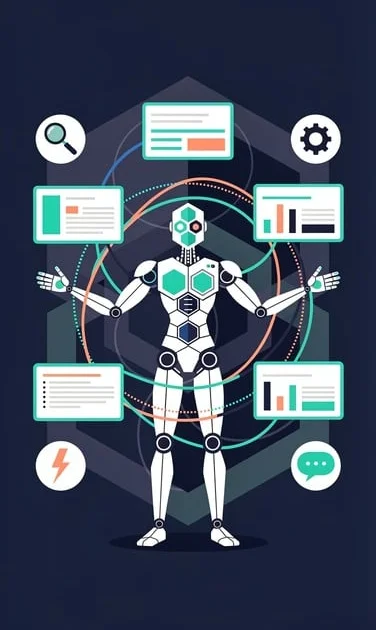
The most significant development is the move from generative AI to proactive “Agentic AI.” These aren't just advanced chatbots. They're autonomous systems designed to understand a high-level goal, create a plan, and then execute complex tasks on their own.
Think of it this way. A senior researcher from the Boston Institute of Analytics puts it perfectly: “we are moving from AI that assists us to AI that acts on our behalf.” Instead of asking an AI to write an email, you'll ask an agent to launch an entire marketing campaign. It will then organize files, build spreadsheets, and write reports without constant human input.
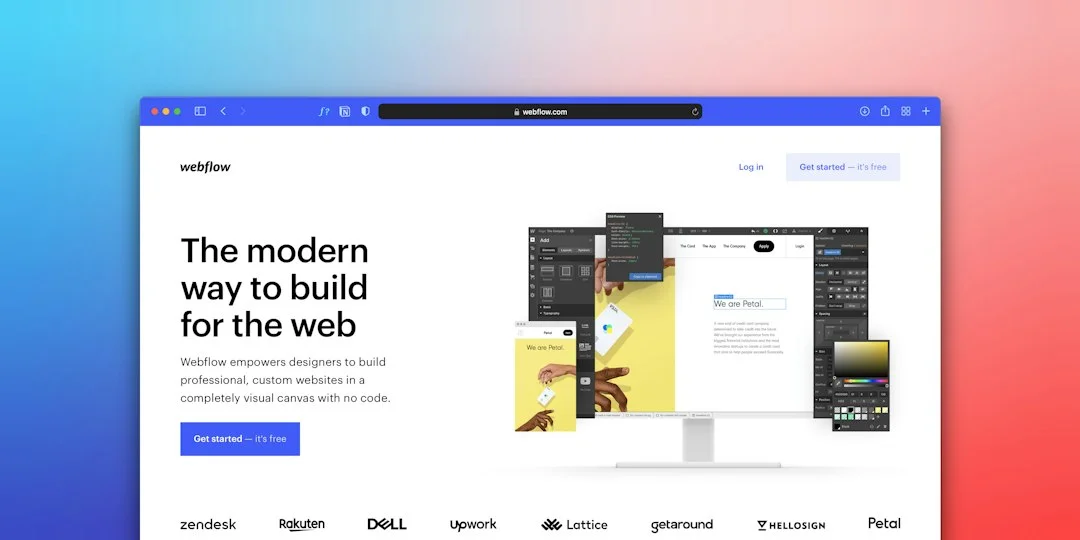
We're already seeing this in action. Microsoft is building agent-like features into its Copilot platform, and Anthropic's Claude Co-work is a prime example of this new capability. Even creative and web design tools are getting smarter. Platforms like BuildEZ.ai are using agentic principles to turn a simple prompt into a complete, production-ready website, automating a process that once took weeks.
New Models are Redefining 'Smart'
The engines driving this revolution are more powerful than ever. April 2026 saw the release of several groundbreaking models, including OpenAI's GPT-5.4Anthropic's Claude Mythos 5and Google DeepMind's Gemini 3.1 Pro. According to the Artificial Analysis Intelligence Index, GPT-5.4 and Gemini 3.1 Pro are currently tied for the top spot, showcasing capabilities that felt like science fiction just 18 months ago.
A key feature of these new models is native multimodality. They can understand and process text, images, audio, and video all at once, in real time. For example, Google's Gemini 3.1 Ultra can analyze a complex financial report, a video of a board meeting, and an audio recording of a sales call simultaneously to provide a comprehensive business summary.
The creative fields are also seeing huge advancements. On April 21, OpenAI launched ChatGPT Images 2.0, a major upgrade to its image generation. Meanwhile, Google DeepMind's Lyria 3 Pro can now generate songs up to three minutes long with detailed structural control.
The Money Tsunami: AI Investment Hits Warp Speed
The financial world is betting big on AI. In the first quarter of 2026 alone, AI startups absorbed an incredible $242 billion in venture capital. To put that in perspective, that's 81% of all startup funding worldwide and more than all venture funding combined in 2024, as reported by PitchBook.
Most of this capital is concentrated in a few key players. A massive 65% of the funding went to just four companies:
- OpenAI: $122 billion
- Anthropic: $30 billion
- xAI: $20 billion
- Waymo: $16 billion
The market itself is exploding. The generative AI market is estimated at $91.57 billion in 2026, a huge jump from $63 billion in 2025. This shows an annual growth rate of about 74%. Companies are seeing returns, too, with an average ROI of $3.70 for every dollar invested in Generative AI.
AI in the Workplace: It's No Longer an Experiment
AI is now a core business function. As of this month, 88% of organizations use Generative AI in at least one department, and 80% of employees report using AI tools in their daily work. The average company now uses six or more AI tools, up from just two in 2023.
This deep integration has a direct impact on the workforce. Mark Zuckerberg of Meta noted that AI is making some hiring unnecessary, as projects that once needed large teams can now be done by a single person. This is a powerful shift, empowering small businesses and solopreneurs with tools like BuildEZ.ai to compete with much larger corporations.
However, this increased productivity comes with a human cost. In April, Meta announced a 10% workforce reduction, affecting nearly 8,000 employees. Microsoft offered voluntary retirement to about 8,750 workers, with both companies citing their heavy investments in AI. This trend highlights a growing disruption, particularly for entry-level roles in areas like software development.
The Big Picture: ROI, Governance, and Growing Pains
Despite the massive investment and adoption, translating AI into business value remains a challenge. A PwC study from April 13, 2026, revealed a stark imbalance: just 20% of organizations are capturing nearly 74% of AI's economic value. Many companies are still struggling to see a significant ROI from their generative AI projects.
At the same time, governments are racing to catch up. April 2026 is a critical month for global AI governance. The United Nations is working toward an interoperable global framework, while the EU's AI Act is already in effect. In the U.S., a new national policy framework is clashing with state-level laws like New York's RAISE Act, creating a complex regulatory environment for developers.
"2026 will be an era of AI evaluation. We need rigor over hype." - Stanford Faculty Prediction
There are other serious concerns. The environmental impact is growing, with AI data centers now consuming as much power as the entire state of New York. The erosion of trust due to highly realistic deepfakes is another major challenge, blurring the lines between what's real and what's AI-generated.
What This Means for Your Business
The message from April s AI trends is clear: the era of passive AI is over. Businesses that fail to adopt proactive, agentic systems risk being left behind. The technology is no longer just a tool for individual productivity; it's becoming a core operational partner.
However, success isn't guaranteed by simply buying the latest AI model. The real challenge lies in integrating these systems effectively, measuring their impact, and navigating the ethical and regulatory hurdles. The companies winning with AI are those that are strategic, focusing on tangible business outcomes rather than just the technology itself.
The rise of agentic AI is creating incredible opportunities for businesses of all sizes to automate complex processes and innovate faster than ever. Staying informed about these shifts is the first step. The next is to start experimenting with powerful, accessible platforms that put these new capabilities into your hands. This is the moment to build smarter, not just bigger, and AI is the key to doing it.