Imagine a future where 40% of your enterprise applications seamlessly embed task-specific AI agents. Gartner forecasts this will be our reality by the end of 2026, a significant leap from less than 5% in 2025. This isn't just about automation; it's about intelligent, autonomous systems driving efficiency and innovation across your business. The global AI agents market itself is projected to reach an impressive $10.9-12.06 billion in 2026, indicating a massive shift in how companies operate (jbinternational.co.uk).
As AI agents become a core component of business operations, choosing the right framework is crucial. It impacts scalability, governance, and the reliability of your AI initiatives. This review compares the leading frameworks: LangGraph, CrewAI, and AutoGen. We'll look at their strengths, weaknesses, and suitability for different enterprise needs, drawing on the latest developments from 2025-2026.
The Evolving Enterprise AI Agent World (2025-2026)
The AI agent framework world has matured significantly in 2025-2026. The focus is now firmly on production-readiness and widespread enterprise adoption. Organizations are moving past experimentation and integrating these powerful tools into their core business processes.
LangGraph reached its v1.0 milestone on October 22, 2025, cementing its status as a production-class platform. Further enhancements arrived with v1.2 on May 11, 2026, which brought graceful shutdown capabilities and improved Pydantic coercion for output. Companies like Klarna, Uber, and JP Morgan are already running LangGraph in production, showcasing its robust capabilities for complex, long-running, and regulated workflows (focused.io, towardsai.net).
CrewAI continues to gain popularity for its user-friendliness and role-based agent orchestration. It's a favorite for rapid prototyping and quickly spinning up multi-agent systems. Version 0.105, released in March 2026, introduced enterprise observability and scheduling features, making it even more appealing for business use. Its GitHub repository reflects this growth, boasting over 47.8k stars by April 2, 2026, and 27 million PyPI downloads. CrewAI is also integrating with tools like Latenode to connect its agent capabilities with broader enterprise systems (crewai.com, latenode.com).
AutoGenbacked by Microsoft, saw a major redesign with its v0.4 release in January 2025. This version introduced an event-driven core, an AgentChat API, and a no-code Studio. These changes made it more production-ready and lowered the entry barrier for many enterprises (microsoft.com, visualstudiomagazine.com). AutoGen excels in areas like code review, document extraction, customer support triage, and data analysis, with users reporting significant time savings of 30-50% (medium.com).
LangGraph: The Backbone for Production-Grade AI Workflows
When reliability, explicit control, and deep observability are non-negotiable, LangGraph stands out. It's designed for workflows that demand precision and a clear understanding of every step. Experts consider it the most production-ready framework for these kinds of critical applications (focused.io).
Pros of LangGraph:
- Durable State and Explicit Control: LangGraph's core strength is its deterministic graph execution and native state persistence. This means your agent workflows can be long-running, resume from interruptions, and maintain their context reliably. You have granular control over how agents transition between states and execute tasks (paul-okhrem.com).
- Observability: Integrated with LangSmith, LangGraph offers unparalleled visibility into agent execution. You can trace every decision, every tool call, and every step, which is vital for debugging, auditing, and ensuring compliance in regulated industries.
- Enterprise Adoption: Major players like Klarna, Uber, and JP Morgan trust LangGraph for their stateful, long-running agent workflows in production environments (focused.io). This real-world validation speaks volumes about its stability and capabilities.
- Graceful Shutdown: The v1.2 update in May 2026 added graceful shutdown, improving resilience and resource management in live deployments (towardsai.net).
Cons of LangGraph:
- Steeper Learning Curve: The explicit nature of graph definition and state management can be more complex than other frameworks, especially for developers new to agent orchestration.
- More Verbose for Simple Tasks: For straightforward, single-turn agent interactions, LangGraph might feel overly complex compared to more abstraction-heavy frameworks.
Use Cases for LangGraph:
LangGraph is ideal for applications where every step must be auditable and reliable. Think about multi-stage financial approval processes, complex regulatory compliance checks, or customer support systems that need to maintain context over days. It's perfect for building core business logic that requires robust error handling and human oversight (towardsai.net).
Pricing:
LangGraph is an open-source library. While the framework itself is free, services like LangSmith, which enhance its observability, may have associated costs.
CrewAI: Rapid Prototyping and Role-Based Orchestration
If you need to quickly bring multi-agent systems to life, CrewAI is an excellent choice. It emphasizes intuitive design and a role-based approach, making it accessible for developers and business users alike. Its rapid growth in popularity highlights its effectiveness for quickly iterating on agentic ideas (crewai.com).
Pros of CrewAI:
- Ease of Use: CrewAI's design focuses on simplicity. You define agents with specific roles, goals, and tools, then assign them to a crew. This abstraction makes it incredibly fast to get started and build functional agent systems (medium.com).
- Role-Based Abstraction: The framework's role-based paradigm mirrors real-world team structures. This makes it intuitive to design agents that specialize in certain tasks, enhancing clarity and modularity.
- Rapid Prototyping: Its straightforward approach allows for much faster iteration and prototyping of multi-agent systems. You can quickly test different agent configurations and workflows.
- Growing Community and Features: With over 47.8k GitHub stars and 27 million PyPI downloads by April 2026, CrewAI has a vibrant community. Recent updates, like v0.105 in March 2026, added enterprise observability and scheduling features, improving its readiness for production (crewai.com).
Cons of CrewAI:
- Less Explicit Control: Compared to LangGraph, CrewAI offers less fine-grained control over state management and complex conditional logic within a workflow. This can be a limitation for highly deterministic or regulated processes.
- Integration Needs: While powerful, CrewAI might need additional integrations with tools like Latenode to seamlessly connect its agent capabilities with existing enterprise systems and data sources (latenode.com).
Use Cases for CrewAI:
CrewAI shines in scenarios where creative collaboration and rapid synthesis are key. It's highly effective for automating content creation pipelines, conducting multi-stage research, and even performing complex financial analyses (crewai.com). Organizations also use it for strategic decision-making and automated content production, making it a strong contender for tasks requiring structured output from multiple perspectives.
Pricing:
CrewAI is an open-source framework, freely available for use.
AutoGen: Conversational AI and Iterative Collaboration
Backed by Microsoft, AutoGen is built for dynamic, conversational multi-agent systems. It excels when agents need to interact with each other, with humans, or even execute code iteratively. Its focus on event-driven architecture makes it robust and scalable for various enterprise applications (microsoft.com).
Pros of AutoGen:
- Conversational Multi-Agent Systems: AutoGen's AgentChat API allows agents to converse and collaborate naturally, mimicking human team dynamics. This makes it excellent for scenarios requiring iterative feedback and adjustments (visualstudiomagazine.com).
- Human-Agent Collaboration: It's designed to seamlessly integrate human input and feedback into agent workflows. This is crucial for tasks that require human oversight, approval, or expertise at specific points.
- Iterative Code Execution: AutoGen is particularly strong for tasks involving code generation, execution, and debugging. Agents can write code, run it, observe the output, and refine their approach, which is invaluable for development and data analysis tasks (medium.com).
- Microsoft Backing & Studio: Microsoft's support provides a strong foundation. The AutoGen Studio offers a no-code interface, lowering the entry barrier and making it easier for non-developers to design and manage agent workflows (microsoft.com, visualstudiomagazine.com).
- Significant Time Savings: Enterprises using AutoGen for tasks like code review and data analysis have reported time savings of 30-50% (medium.com).
Cons of AutoGen:
- Potential Overkill for Simple Tasks: For very simple, non-conversational, or non-iterative tasks, AutoGen's event-driven and collaborative nature might introduce unnecessary complexity.
- Resource Intensive for Complex Chats: Extensive multi-agent conversations can consume more computational resources, especially with larger language models.
Use Cases for AutoGen:
Microsoft AutoGen is trusted by enterprises for diverse applications. These include automating code reviews, extracting information from documents, triaging customer support requests, and performing complex data analysis (medium.com). Its ability to handle iterative processes and human-in-the-loop scenarios makes it invaluable for tasks where dynamic interaction is paramount.
Pricing:
AutoGen is an open-source framework, making it accessible without direct licensing costs.
Choosing Your AI Agent Framework: Key Considerations
Selecting the right AI agent framework isn't a one-size-fits-all decision. The best choice depends heavily on your specific operational constraints, your team's technical skills, and the exact nature of the problem you're trying to solve. By 2026, these frameworks are expected to converge on similar core functions, making the underlying business logic even more important than framework-specific details (substack.com).
Production Readiness vs. Prototyping Speed:
- If your priority is production readiness, reliability, and strict governance for critical, long-running workflows, LangGraph is likely your strongest contender. Its explicit control and state persistence are hard to beat (focused.io).
- For rapid prototyping, quick iteration, and intuitive design for creative or research-focused tasks, CrewAI offers an excellent starting point (medium.com).
- When your workflows demand conversational collaboration, iterative feedback, and human-agent interactionespecially with code execution, AutoGen provides robust solutions (microsoft.com).
Governance and Auditability:
As agentic AI projects face cancellation risks due to governance gaps, frameworks that offer robust governance, auditability, and compliance features will gain prominence (plainenglish.io). LangGraph's explicit control flow and observability features align well with these enterprise demands, providing the transparency needed for regulated industries.
Hybrid Approaches Prevail:
Many enterprises aren't picking just one framework. A growing trend involves adopting hybrid architectures, combining frameworks for their respective strengths (scalablepath.com). For example, you might use CrewAI for initial research and synthesis, then transition to LangGraph for the execution, compliance review, and human approval stages of a workflow. This balanced approach allows organizations to get the best of all worlds.
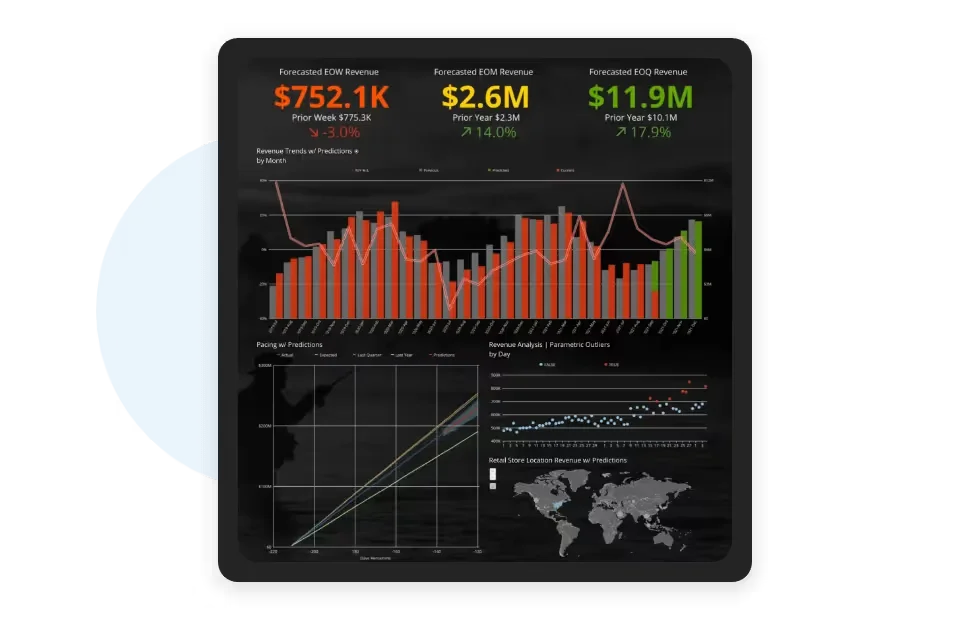
Just as choosing the right AI agent framework is critical for building powerful backend processes, selecting the right platform to present and interact with those processes is equally important. For instance, if your agents generate complex reports or data visualizations, you'll need an efficient way to publish them online. This is where a platform like BuildEZ.ai can help, by quickly creating a production-ready website to showcase or interact with your AI agents' outputs, without needing extensive coding.
Model Commoditization:
The increasing parity between mid-tier and frontier models will shift focus towards cost-effectiveness. This will lead to more mixed-model setups, where different models are chosen for different tasks based on their performance and price, regardless of the underlying framework (substack.com).
Conclusion: The Future is Hybrid and Governed
The world of AI agent frameworks is dynamic and rapidly evolving, but clear leaders are emerging for different enterprise needs. LangGraph excels in production readiness and explicit control, making it ideal for critical, stateful workflows. CrewAI offers a faster path to prototyping with its intuitive, role-based design, perfect for rapid development and creative tasks. AutoGen, with Microsoft's backing, shines in conversational and code-execution-centric multi-agent systems, fostering collaboration between humans and AI.
Ultimately, there's no single "best" framework. The most effective strategy often involves understanding your specific project requirements and potentially adopting a hybrid approach. By combining the strengths of these frameworks, enterprises can build robust, scalable, and governed AI agent systems. As you innovate with AI agents, remember that presenting your solutions effectively is key. BuildEZ.ai can help you quickly launch professional, AI-powered websites to showcase your groundbreaking agentic applications, turning complex AI processes into accessible digital experiences.