Imagine a world where 75% of new business applications are built without writing a single line of traditional code. That is not a far-off dream; it is our reality in October 2026, according to various industry forecasts. The global software developer shortage, nearing 4 million unfilled positions, has created an urgent need for new ways to build, and no-code tools are stepping up in a big way. They are doing so by embracing Artificial Intelligence at their core.
This is not just an incremental update. We are witnessing a fundamental transformation in how software is created, making app development accessible to virtually anyone with an idea. The tools have matured, the market has exploded, and AI is now the invisible hand guiding the entire process. Let us explore the latest developments in no-code tools this October 2026.
The No-Code Revolution: Mainstream and AI-Driven Development
The no-code and low-code development market is experiencing unprecedented growth. Gartner projects the low-code development technologies market alone will reach approximately $44.5 billion in 2026, growing at about 19% annually. Meanwhile, the global no-code development platforms market is expanding from $35.61 billion in 2025 to $45.24 billion in 2026, a truly impressive compound annual growth rate (CAGR) of 27.1%, as reported by openpr.com.
This growth is not just about bigger numbers. It signals a shift where no-code and low-code solutions are no longer niche options. They are now considered mainstream infrastructure for building crucial business applications. The integration of AI is not merely an enhancement; it is a fundamental shift that is redefining the entire development paradigm.
Beyond Prototypes: The Rise of Governed No-Code Platforms
A pivotal development in 2026 is the clear bifurcation of the no-code category. On one side, we have what many call "AI prototype generators." These tools are designed for quickly producing "throwaway apps" or Minimum Viable Products (MVPs) in minutes, perfect for rapid prototyping and testing concepts.
However, these quick-build solutions often lack the mature security and robust data handling capabilities required for production-ready applications. This is where the other side of the bifurcation comes in: "governed platforms." These are sophisticated systems that run real, owned, and compliant applications at scale, with AI serving to accelerate these governed no-code processes.
The distinction is critical. While rapid prototyping is invaluable, businesses ultimately need secure, scalable, and compliant applications to power their operations. Governed platforms ensure that the speed and accessibility of no-code do not come at the expense of reliability and data integrity.
AI's Evolution: From Code Generation to Intent-Driven Creation
The role of Artificial Intelligence in no-code tools has evolved dramatically. It is no longer just about generating snippets of code. AI-driven development tools are increasingly curtailing the traditional remit of no-code, transitioning the focus towards model orchestration and high-level knowledge work.
Humans now express their intent through abstract models and natural language, rather than explicit code. Steven Pappadakes, Founder and CEO of NE2NE, puts it perfectly, emphasizing that "simplicity is the ultimate form of sophistication." Businesses that resist this shift will face bureaucratic slowdowns, he warns, as noted by devopsdigest.com.
Jithin Bhasker, Group VP of Product & GM, AI Application Platform Business at ServiceNow, predicts that low-code platforms will fully materialize their promise by the end of 2026. This means business users can create bespoke applications with AI assistance, while professional developers focus on guiding standards, security, and integration, according to devopsdigest.com. This blurring of the line between "developer" and "user" is a defining characteristic of our current landscape.
No-code, traditionally, means application development using entirely visual, declarative tools like drag-and-drop interfaces, aimed at business users and citizen developers. Low-code, while primarily visual, allows for optional custom code for advanced logic or integration, targeting developers and technical business users. However, the lines are increasingly blurring, with platforms converging towards hybrid models.
Platforms like TashiOS exemplify this shift, enabling users to describe their ideas in plain English and have AI translate that intent into functional applications. This moves the user away from thinking about specific code or even visual blocks, towards simply defining the problem and desired outcome.
Real-World Impact: Leading No-Code Tools and AI Innovations in 2026
The market is rich with examples of no-code tools, both those that have been around for a while and those pushing the boundaries with AI. Here is a snapshot of what is making waves:
General No-Code/Low-Code Platforms:
- Microsoft Power Apps: A stalwart for enterprise application building.
- OutSystems and Mendix: Leading low-code platforms for complex enterprise solutions.
- Appian: Known for its business process management and low-code capabilities.
- Bubble: Continues to be a leading visual web app builder, now with significant AI enhancements.
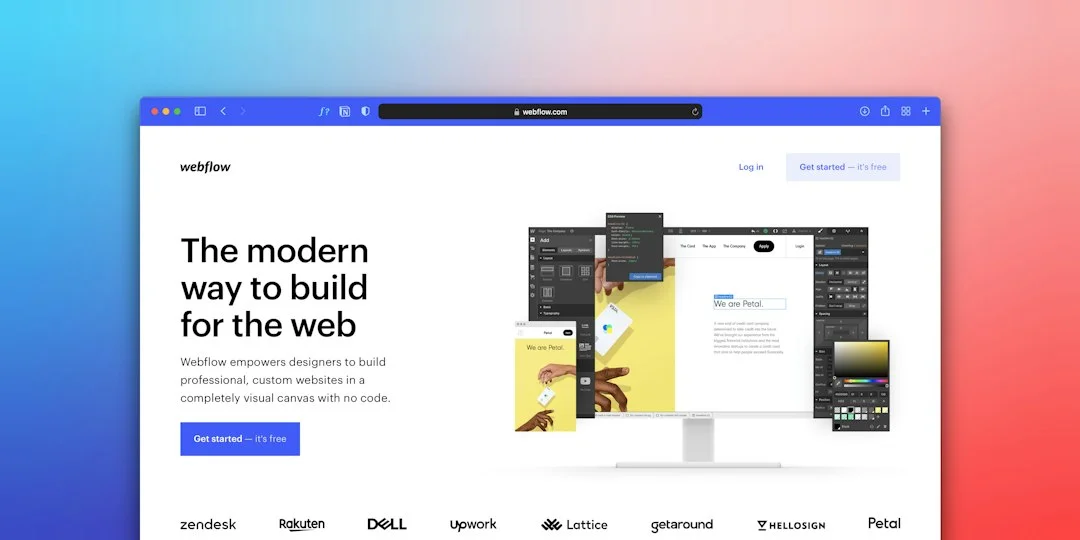
- Webflow: A powerful tool for responsive website design without code.
- Airtable, Softr, Zapier, Glide: These platforms make it easy to manage data, build client portals, automate workflows, and create apps from spreadsheets, respectively, as highlighted by caspio.com, zapier.com, and hostinger.com.
AI-Enhanced No-Code Platforms:
- Atoms: A no-code AI platform that uses AI agents for market research, backend building, app deployment, and SEO optimization. It supports user authentication, databases, and Stripe payments, as noted by marktechpost.com.
- Bubble: Now includes AI features for generating page layouts and logic directly from text descriptions.
- Adalo: Focuses on native mobile and web apps, featuring an AI assistant named Ada for app creation from prompts and "Magic Add" for new features via natural language.
- Glide: Transforms spreadsheets and databases into apps, now generating interfaces and AI-powered tables and actions from connected data sources.
- Zite: Offers AI-built UIs and a built-in database, making it ideal for non-technical teams building business applications, according to zite.com.
- Lovable: An AI-first code generation tool specifically for founders prototyping MVPs.
- FlutterFlow: Caters to developer-adjacent teams wanting native performance for cross-platform Flutter apps with code export.
- Knack: Known for role-based access and workflow automation, used by operations teams to replace spreadsheets.
- Blink.new: Demonstrated in October 2026, this AI app builder creates full-stack desktop apps, websites, mobile apps, AI agents, and Chrome extensions from prompts, handling database, hosting, and backend, as shown on youtube.com.
Specialized AI applications are also emerging. TraceLink announced a breakthrough on October 21, 2026, with its no-code OPUS Agents. Powered by the OPUS Brain, these agents reliably perform critical supply chain work in seconds through optimized Semantic Inference Plans, addressing scalability barriers for agentic operations, according to prnewswire.com.
The definition of no-code itself has diversified in 2026, encompassing three distinct approaches:
- Module Assembly: Users configure and combine pre-built blocks, such as menus, blogs, or booking calendars, requiring no logic or variables.
- Visual Programming: Users drag screens and wire logic in a visual editor, effectively programming with state, conditionals, and data binding without typing code. Platforms like FlutterFlow, Adalo, Bubble, and Glide fall into this category.
- AI-First Code Generation: Tools that generate code from prompts, often with AI agents handling various development stages. Examples include Lovable and Atoms.
Unpacking the Data: Explosive Growth in the No-Code AI Market
The numbers do not lie. The no-code and low-code market continues its aggressive expansion, underscoring its strategic importance for businesses globally.
- The low-code/no-code development market is projected to reach $58.2 billion by 2029, maintaining a 14.1% annual growth rate, as reported by fortunebusinessinsights.com.
- Even more strikingly, the global low-code market is expected to hit $101.7 billion by 2030, growing at a CAGR of 22.3% between 2024 and 2030, having generated $30.1 billion in revenue in 2024, according to straitsresearch.com.
- Gartner's prediction that 70% of new applications developed by organizations would use low-code or no-code technologies by 2025 is largely a reality in 2026. Other sources suggest this figure is closer to 75% of new applications by 2026, as per qubit.capital.
- A staggering 81% of companies consider low-code strategically important, with 31% globally using it at the core of their software strategy, according to qubit.capital.
- The efficiency gains are undeniable: app development is 90% faster with low-code platforms, and companies can cut development costs by 70%, as shown by qubit.capital.
- By 2026, 80% of low-code users are expected to be outside IT departments. Citizen developers are projected to soon outnumber professional developers four to one, with demand for their apps growing five times faster than IT can handle, according to gitnux.org and qubit.capital.
- Furthermore, 90% of developers report that low-code helps manage their application backlogs, a crucial benefit in today's fast-paced environment, according to qubit.capital.
No-Code AI Platform Market Specifics:
- The global no-code AI platform market size was valued at USD 6.56 billion in 2025 and is projected to grow to USD 8.6 billion in 2026. This market is further projected to reach USD 75.14 billion by 2034, exhibiting a CAGR of 31.13%, as reported by openpr.com.
- Another report indicates a market size of USD 3.91 billion in 2025, growing to USD 4.73 billion in 2026, and reaching USD 21.72 billion by 2034 with a CAGR of 20.99%, according to straitsresearch.com.
- North America held a dominant 38.4% market share in the no-code AI platform market in 2025, underscoring the region's early adoption and investment, as per openpr.com.
The Talent Gap Solution: No-Code, AI, and the Citizen Developer
The era of affordable automation has truly begun, making sophisticated automation accessible far beyond luxury enterprises. The persistent global software developer shortage, approaching 4 million unfilled positions, is a primary catalyst for the widespread adoption of no-code and low-code platforms, as noted by caspio.com. These tools empower non-technical teams to build applications, effectively bridging the talent gap and democratizing creation.
AI is fundamentally reshaping how software is built. It is shifting the focus from mere speed of execution to intent-driven systems. The human role is evolving to center on correctly scoping and defining problems, with AI handling the low-level code output. Businesses are expected to see significant returns on their early investments in AI-driven development as its reach expands across various departments.
However, the rapid pace of AI-generated code also presents challenges. AI is producing code faster than human systems can securely review, test, and deploy it, potentially filling enterprise systems with "brittle code." This underscores the importance of "governed platforms" that prioritize security and compliance over disposable prototypes. This is where platforms like TashiOS provide a critical advantage, offering AI-powered creation within a framework designed for robust, scalable, and secure applications.
Looking Ahead: The Future of Building with No-Code Tools
The future of integration lies with organizations that embrace no-code and low-code platforms. These tools enable every employee to connect systems, automate processes, and drive innovation without relying heavily on specialized developers. The shift towards cloud-based AI solutions and AI-as-a-service models is further fueling the growth and accessibility of no-code AI platforms.
As we move forward, the emphasis will continue to be on empowering individuals. The ability to articulate an idea and see it manifest into a functional application, website, or online business, all without writing code, is no longer futuristic. It is the present.
The evolution of no-code tools, deeply interwoven with AI advancements, promises a future where innovation is limited only by imagination, not by technical skill or developer availability. This October 2026, we are not just witnessing trends; we are living through a revolution in how we build the digital world.
Ready to experience the future of app development? Explore TashiOS today and start building your ideas with AI credits, no code required. Turn your vision into a real business, faster than you ever thought possible.