Imagine building a fully functional website or even a complex application just by describing your idea in plain English. This isn't a futuristic dream; it's the reality of November 2026, where AI website builders are transforming digital creation at an astonishing pace. The global AI-powered website builder market, valued at a substantial $3.24 billion this year, is projected to soar to an estimated $17.43 billion by 2035, growing at a remarkable Compound Annual Growth Rate (CAGR) of 20.55% [3]. This rapid expansion isn't just about faster websites; it's about fundamentally changing who can build online, and what they can achieve.
The acceleration of digitalization across industries, coupled with an insatiable demand for personalized and interactive online presences, fuels this growth. We're seeing a fundamental shift, moving beyond simple online brochures to dynamic, intelligent platforms that can truly power businesses. This comprehensive overview explores the latest developments in AI website builders as of November 2026, offering insights into this rapidly evolving area.
The AI Web Revolution: A Market Soaring
The numbers speak for themselves. The AI website builder market jumped 20% from 2025 to 2026, reaching $3.24 billion, and it's just getting started [3]. This isn't a niche market anymore; it's a driving force in the digital economy. North America alone commands a significant 38.25% of the global website builder market revenue [3].
A staggering 67.39% of business owners now prefer AI website builders over traditional development methods, and it's easy to see why [3]. AI can reduce website production time by an astonishing 70% [3]. This efficiency means businesses can launch faster, iterate quicker, and respond to market demands with unprecedented agility. Cloud-based deployment models, which captured 81.08% of website builder revenue in 2025, are clearly the preferred choice, offering scalability and accessibility that on-premise solutions simply can't match [3].
Beyond Templates: The Rise of Intelligent Co-Pilots
The days of AI website builders merely shuffling pre-made templates are long gone. In 2026, these tools are powered by highly sophisticated, context-aware, and personalized development experiences [1, 5]. Advancements in generative AI, machine learning, and natural language processing are the engines behind this evolution.
We're witnessing the rise of agentic UI and conversational AI, transforming simple interfaces into intelligent co-pilots [1, 5, 18]. Imagine crafting entire website layouts and app interfaces from simple text prompts. These AI assistants suggest dynamic content, generate intelligent images, and even provide initial copywriting, all while understanding the user's intent and business goals [1, 5]. Platforms like TashiOS embody this shift, allowing users to describe their ideas in plain English to build real apps, websites, online stores, and Android apps with no code, then go live and earn. This capability moves far beyond basic site generation, offering a truly collaborative design and development experience.
Building Full-Stack: AI's Leap into Application Development
One of the most significant shifts in November 2026 is the blurring line between website builders and application builders. AI is now empowering users to create full-stack applications complete with databases, authentication, and custom backend logic directly in the browser [6, 14].
Consider platforms like Bolt.new, which builds full-stack applications with these advanced features [6]. Lovable is another example, noted for building web apps and sites that include logins and a database, catering to users who need more than just static pages [14]. Base44 stands out as an AI app builder that generates working web apps or websites from plain language descriptions, integrating built-in data, logic, and out-of-the-box connections to business tools [11]. This means entrepreneurs and developers can prototype and launch complex online businesses faster than ever before, without needing extensive coding knowledge.
The Code Question: Ownership, Export, and Flexibility
A key concern for many users, especially businesses, has always been platform lock-in. The good news is that AI is now generating clean, optimized, and production-ready code in popular frameworks like React and Vue [8]. This development addresses the need for ownership and flexibility.
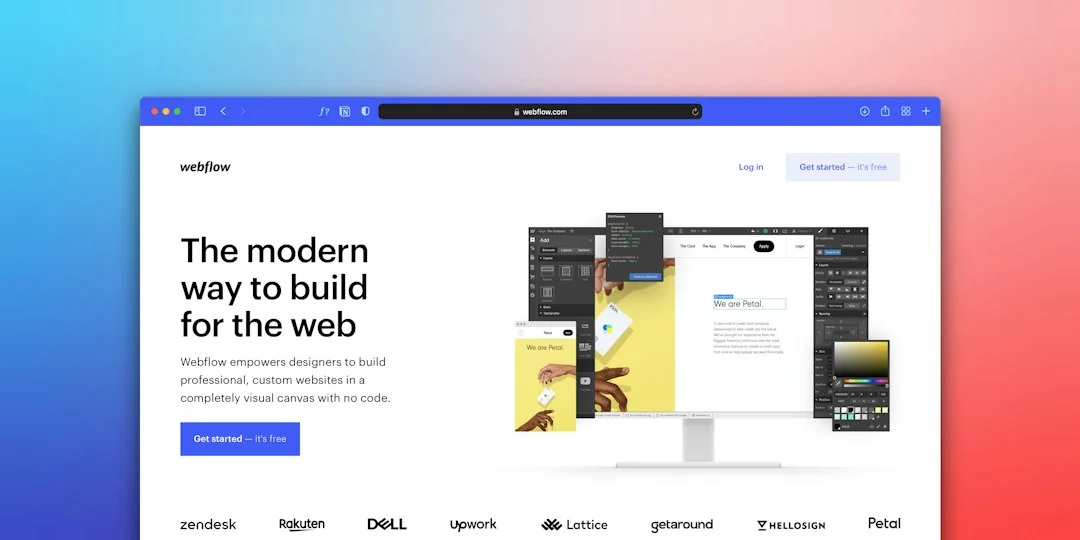
Some platforms go a step further by offering code export, ensuring users retain full ownership of their digital assets. For instance, 10Web exports full WordPress sites and files, effectively preventing platform lock-in and giving users complete control over their website's future [4]. This approach is crucial for those who want the speed of AI generation but also the long-term security and flexibility of owning their code. Even prominent traditional website builders like Wix, Squarespace, and GoDaddy now integrate AI features alongside their established drag-and-drop editing and templates, creating powerful hybrid solutions that cater to a wider range of technical abilities and preferences.
Expert Insights and Real-World Impact
While AI website builders are undeniably powerful, expert opinions remind us that technology is only one piece of the puzzle. Donato Dandreo, President and Digital Strategist at RainCastle Communications, notes that while AI tools are faster and produce better results than traditional DIY methods, they haven't eliminated the need for strategic expertise, SEO, or testing [10]. He rightly emphasizes that there's a significant difference between generating a website that looks finished and one that is positioned to achieve meaningful business results.
This perspective is vital. AI can handle the mechanics, but human insight drives the strategy. Here are some real-world examples showcasing the diverse capabilities available:
- Wix: A strong all-round choice for small businesses, known for comprehensive AI tools that extend to content, branding, marketing, and e-commerce. It can create a complete, customized website in minutes [4].
- 10Web: Ideal for WordPress users, this AI-powered platform recreates existing websites and generates full WordPress sites from prompts, offering faster development and automated optimization [4].
- Framer AI: Favored for portfolios and marketing sites, it's a design-first builder offering deep visual customization, perfect when aesthetics are paramount [4].
- Cloudways AI Website Builder: Launched just this month, on November 16, 2026, this tool from DigitalOcean transforms a text prompt into a complete WordPress or WooCommerce site in approximately 4 minutes, boasting a 98% success rate during its public preview [9, 15]. It generates standard WordPress sites using Gutenberg blocks, allowing users to retain ownership and export their sites [9].
- Hostinger AI Builder: Praised for user-friendliness and speed, it generates a complete site in under a minute, balancing simplicity with deep functionality [7].
- Durable: Known for the fastest possible launch, generating a basic site in approximately 30 seconds [7].
What's Next? Predictions for an AI-Powered Future
The trajectory of AI website builders points to several clear implications and predictions for the coming years:
Democratization of Web Development: AI continues to lower the barrier to entry, empowering individuals and small businesses globally. Anyone with an idea can now create a professional online presence without needing extensive technical knowledge or a large budget [16]. This is a massive win for entrepreneurs and creatives everywhere.
Accelerated Time-to-Market: The ability to generate functional websites and applications rapidly significantly reduces development cycles. This means faster prototyping and quicker deployment of new ideas and businesses, giving early movers a distinct advantage [16].
Cost Reduction: The need for large development teams for initial builds is decreasing, leading to substantial cost savings, particularly for startups and small to medium-sized enterprises (SMEs) [16]. Resources can be reallocated to strategy, marketing, and refinement.
Focus on Strategy and Customization: As AI handles the heavy lifting of design and content generation, human experts can shift their focus to higher-value activities. Strategic planning, robust SEO, and thorough testing remain paramount. The distinction between a visually appealing site and a results-driven one will only become more pronounced [10].
AI as a Co-Pilot for Professionals: For seasoned designers and developers, AI tools are becoming indispensable co-pilots. They automate repetitive tasks, allowing professionals to concentrate on complex problem-solving, creative vision, and bespoke integrations that truly differentiate a project [17]. Around 40% of web designers already use AI tools daily, a figure that is sure to grow [3].
Blurring Lines and Ecosystem Integration: The distinction between website builders and application builders will continue to fade, with platforms offering more full-stack capabilities and seamless integrations with other business tools. Expect AI to play a larger role in connecting different services, from CRM to marketing automation, directly within the builder interface.
The advancements in AI website builders in November 2026 are nothing short of revolutionary. We're moving into an era where digital creation is more accessible, faster, and more powerful than ever before. For anyone looking to build an online presence, launch an app, or start a business, the tools available today make these aspirations incredibly tangible.
Ready to experience the future of digital creation? TashiOS is at the forefront of this revolution, offering an AI-powered operating system where you can describe your ideas in plain English and build real apps, websites, online stores, and Android apps with no code. Then, go live and earn. Start your journey today with AI credits and turn your vision into reality.