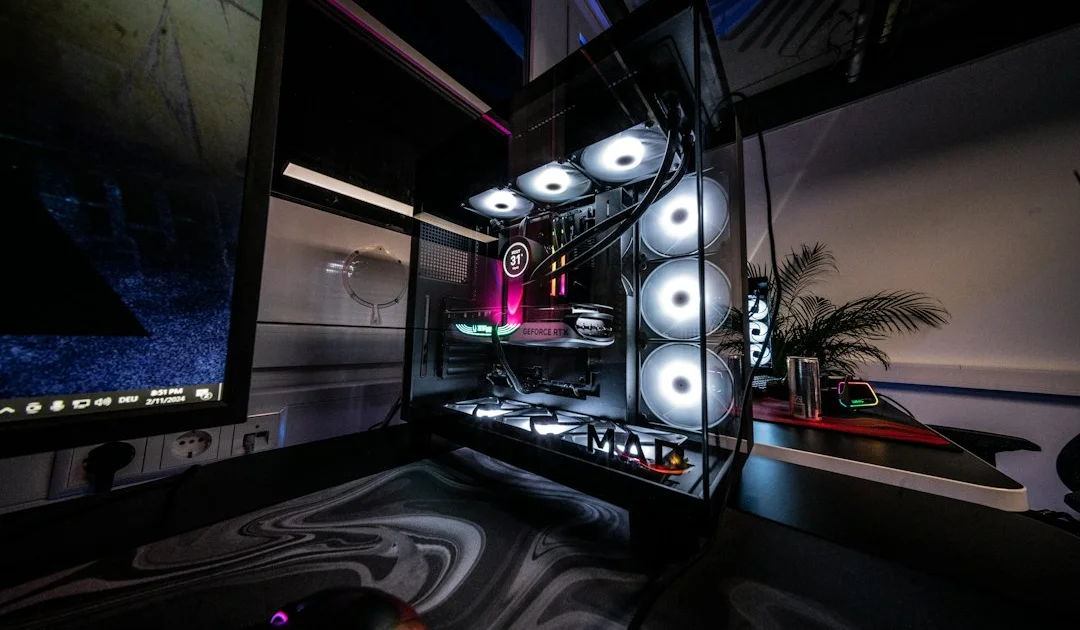
Imagine a world where your most complex AI tasks run not in some distant cloud, but right on your desk, with lightning speed and ironclad privacy. That future isn't just arriving, it's already here in July 2026, and it's booming. The global AI workstation market is projected to reach an astounding $21.6 billion this year, a significant leap driven by a fundamental shift in how we approach artificial intelligence.
This isn't merely about faster computers. It's about a profound change in how professionals work, innovate, and create. From cutting-edge hardware to evolving AI strategies, the landscape of professional computing is being reshaped right before our eyes. Let's explore the powerful forces driving this transformation.
The AI Workstation Boom: Why Local is the New Cloud
The numbers speak for themselves. The global AI workstation market is experiencing robust growth, projected to reach $21.6 billion in 2026, marking a substantial increase from $18.6 billion in 2025. This reflects a healthy compound annual growth rate (CAGR) of 16.3% from 2026 to 2034, as reported by Fortune Business Insights.
This boom isn't random. It's fueled by a clear shift towards on-device AI processing. Organizations are increasingly investing in on-premise AI workstations due to growing concerns over data sovereignty, regulatory compliance, and the often prohibitive ongoing costs of cloud computing. Local processing allows for faster iteration, enhanced data privacy, and lower long-term expenses, making it an attractive option for many.
Many companies are adopting a hybrid AI approach. This strategy combines local workstations for rapid prototyping and development with cloud clusters for large-scale training. Tom Butler, VP of Commercial Portfolio and Product Management at Lenovo Intelligent Devices Group, confirms this trend, stating that two thirds of companies prefer hybrid AI as their primary model. This makes workstations capable of handling AI workflows on-device an absolute must for modern enterprises.
Deloitte's Tech Trends 2026 report further emphasizes that AI is moving from experimentation to strategic impact. Organizations need to modernize their IT infrastructure to keep pace. This means powerful AI workstations aren't just a luxury; they're a strategic necessity for staying competitive and agile in a rapidly evolving market.
Next-Gen Hardware: The Engines of On-Device AI
The heart of this AI revolution lies in the incredible advancements in hardware. Mid-2026 defines itself by a new generation of GPUs, CPUs, and NPUs, all designed for extreme AI compute capabilities, larger memory capacities, and faster data throughput.
GPUs: The Powerhouses
NVIDIA continues its dominance in professional GPUs. The NVIDIA RTX PRO 6000 Blackwell Workstation Editionlaunched around July 2026, is a true marvel. It boasts 96 GB of GDDR7 memory, over 24,000 CUDA cores, 752 fifth-generation Tensor Cores, and delivers an astonishing 4000 TOPS of AI performance (nvidia.com). This GPU represents a significant leap from previous generations, improving Tensor performance, AI inference, and energy efficiency. Major players like Dell, HP, and Lenovo quickly integrated these RTX PRO Blackwell GPUs into their new mobile and desktop workstations at GTC 2026.
For those with slightly different needs, the NVIDIA RTX PRO 4500 Blackwell Workstation Editionwith 32 GB of GDDR7 memory, also offers substantial power for design, engineering, and data science workflows in manufacturing. Even on the consumer side, the NVIDIA RTX 5090 (32 GB GDDR7)also Blackwell-based with FP8/FP4 support, stands out as the best GPU for fine-tuning and inference in 2026.
AMD is aggressively competing for market share. Its Instinct MI300 series is making waves, with the AMD Instinct MI300X 192GB 750W Accelerator (CDNA 3 architecture) reactivated and orderable in June 2026. It features an unprecedented 192 GB of HBM3 memory, perfectly suited for demanding AI and HPC applications (amd.com). Looking ahead, the AMD Instinct MI325X accelerator is expected in Q4 2026 with up to 288GB of HBM3E memory, promising a 35x increase in AI inference performance over the MI300. AMD's future roadmap includes the MI350 series (CDNA 4) and MI400 series (CDNA "Next") for 2026, with AMD reportedly securing a $60 billion deal with Meta for MI400 series deployment.
Intel isn't standing still either. The Intel Gaudi 3 AI acceleratoravailable via PCIe cards, is now offered on IBM Cloud (intel.com, ibm.com). It provides 4x more AI compute for BF16 and a 1.5x increase in memory bandwidth over its predecessor. Intel projects 50% faster time-to-train on average across Llama2 models compared to NVIDIA H100, a bold claim that highlights Intel's ambition in the AI space.
CPUs and NPUs: The Brains and the Accelerators
While GPUs handle the heavy lifting of parallel processing, high-core-count CPUs remain crucial for data preprocessing and orchestration. AMD's Threadripper PRO 7980Xwith 64 cores and 128 PCIe 5.0 lanes, is a top recommendation for multi-GPU systems. For single-GPU builds, the AMD Ryzen 9 9950X (16 cores) offers strong value. Intel's Xeon 600 processorslaunched in March 2026, show impressive gains, with up to a 9% improvement in single-threaded performance and a 61% improvement in multi-threaded performance over previous Xeon W-2500 and W-3500 series (intel.com).
Neural Processing Units (NPUs) are now standard in AI PCs, dedicated hardware for accelerating AI tasks locally. At CES 2026, Qualcomm's Snapdragon X2 Plus delivered a remarkable 80 TOPS (Tera Operations Per Second) in standalone NPU power, targeting local LLM execution. Intel debuted its Core Ultra Series 3 (Panther Lake)offering a standalone NPU with 50 TOPS and a combined 180 TOPS when using integrated Arc B390 graphics. AMD unveiled the Ryzen AI 400 series (Zen 5)with the flagship Ryzen AI Max+ 395 maintaining a competitive 50 TOPS NPU. These NPUs are pivotal for the rise of efficient, on-device AI applications.
Memory and Storage: The Unsung Heroes
You can have the most powerful GPU, but without sufficient memory and fast storage, your AI workstation will bottleneck. Professionals typically require 64GB or more system memory, with many opting for 128GB or more, especially for large datasets or deep learning models. DDR5 memory kits are essential for the required bandwidth. Fast NVMe SSDs, like the Samsung 990 Pro and WD Black SN850X, are critical for rapid dataset loading, preprocessing, and model checkpointing. These components ensure the data can keep up with the processing power.
The Rise of the AI PC: More Than Just a Workstation
The concept of an "AI PC" is no longer niche. Gartner projects that 143 million AI PCs will be shipped in 2026, indicating a fundamental shift in professional computing. This isn't just about faster traditional tasks; it's about systems designed from the ground up to handle AI workflows efficiently and locally.
Microsoft's Aparna Chennapragada believes 2026 marks the point where AI shifts from an instrument to a true partner (microsoft.com). This partnership is made possible by the proliferation of powerful, accessible AI workstations and PCs. These machines bring datacenter-grade capabilities to individual users, democratizing AI development and deployment.
We're seeing a wave of impressive AI workstations hit the market. Examples include the NVIDIA DGX Spark Personal AI computerwhich brings datacenter-grade AI capabilities to individual creators, and the MSI Personal AI DGX Spark Supercomputer EdgeXperbalancing performance and accessibility. HP offers the ZGX Nano G1n AI Station for compact inference, while the GIGABYTE AI TOP ATOM Personal AI Supercomputer represents the cutting edge of personal AI computing. Lenovo's ThinkStation P4, launched in May 2026, features NVIDIA RTX PRO 6000 Blackwell GPUs and AMD Ryzen PRO 9000 Series processors. Dell Technologies also reimagined its commercial PCs in March 2026, introducing new Pro 5 notebooks with Intel Core Ultra Series 3 and AMD Ryzen AI 400 processor options, alongside Precision workstations featuring NVIDIA RTX PRO Blackwell Generation Laptop GPUs (dell.com, lenovo.com). Even the Dell Pro 5 Micro, a Copilot+ PC mainstream desktop, delivers 50 TOPS NPU performance.
Agentic AI and Productivity: The New Digital Coworkers
The impact of AI workstations extends directly to productivity and the very nature of work. By 2026, 80% of entry-level creative jobs are expected to require AI proficiency, underscoring the necessity for professionals to have access to powerful local AI workstations (aecmag.com). This isn't just a trend; it's a requirement for the modern workforce.
A significant trend is the rise of agentic AI, or "digital coworkers." Charles Towers-Clark, writing for Forbes, predicts that in 2026, AI agents will become better at completing tasks autonomously, leading more companies to implement them to reduce labor costs (forbes.com). Deloitte's Tech Trends 2026 report notes that while 38% of organizations are piloting agentic AI, only 11% have transitioned to production. This shows immense potential waiting to be unlocked.
The benefits are clear. Companies embracing AI for creative tasks have reported a 15% reduction in production costs. Generative AI can reduce development and prototyping cycles by up to 70% (inc.com, intellectia.ai). This level of efficiency gain is transformative, allowing teams to achieve more with less, or to reinvest saved time into more ambitious projects. Platforms like BuildEZ.ai are at the forefront of this shift, using advanced AI models to simplify complex tasks like website creation. Imagine the creative boost when your AI workstation powers tools that build a complete, production-ready website in minutes, letting you focus on the big picture.
However, there's a word of caution from Steven Rogelberg of UNC Charlotte. He warns that while AI will deliver productivity gains, most organizations will use the time saved for more work rather than improving employee experience. This highlights a critical challenge for leaders: how to balance efficiency with human well-being in an AI-driven world.
Challenges and The Road Ahead for AI Workstations
Despite the rapid advancements, the AI workstation market faces its share of challenges. One significant hurdle is supply chain tightness. Memory chip supply is expected to remain constrained through 2026 and into 2027, forcing PC manufacturers to make tradeoffs and potentially leading to price increases. High Bandwidth Memory (HBM), crucial for top-tier AI accelerators, has emerged as a binding supply constraint (crn.com).
The rapid evolution of AI hardware also presents a challenge for workstation longevity. What's cutting-edge today might be mainstream tomorrow. Future-proofing your investment means selecting systems with standard ATX or EATX motherboards, sufficient PSU headroom (1200W+ for future GPUs), and multiple PCIe 5.0 x16 slots to allow for GPU upgrades. This foresight ensures your AI workstation can adapt as technology progresses.
The hybrid AI imperative will only grow stronger. Combining local AI workstations for rapid prototyping and development with cloud clusters for large-scale training offers the best of both worlds: data privacy, iteration speed, and long-term cost efficiency. This approach allows organizations to stay flexible, scaling up to the cloud when needed for massive tasks, while keeping sensitive data and critical development workflows in-house.
This dynamic environment means that staying current with hardware and software is more important than ever. Companies providing AI-powered solutions, like BuildEZ.ai, must continuously adapt their platforms to take full advantage of these new hardware capabilities, ensuring users always have access to the most efficient and powerful tools available.
What This Means for You: Building with AI, Today and Tomorrow
The message is clear: AI workstations are no longer just for researchers or specialized data scientists. They are becoming essential tools for a broad spectrum of professionals. By Q2 2026, close to half of all creatives use AI daily, and 88% of businesses are already using AI design tools. This mainstream adoption means that having powerful local AI compute is a competitive advantage, if not a necessity.
Whether you're a designer rendering complex 3D models, a developer fine-tuning a custom LLM, or a marketer generating engaging content, the capabilities of a modern AI workstation directly translate to increased productivity and innovative output. The era of AI as a partner, not just a tool, is here, and your hardware needs to reflect that.
As AI continues to integrate into every facet of our professional lives, platforms that simplify complex AI tasks will become invaluable. BuildEZ.ai is built precisely for this future, empowering you to create stunning, production-ready websites with the power of AI. Experience how advanced AI, powered by the latest workstation technology, can transform your workflow. Visit BuildEZ.ai today and start building your future, effortlessly.