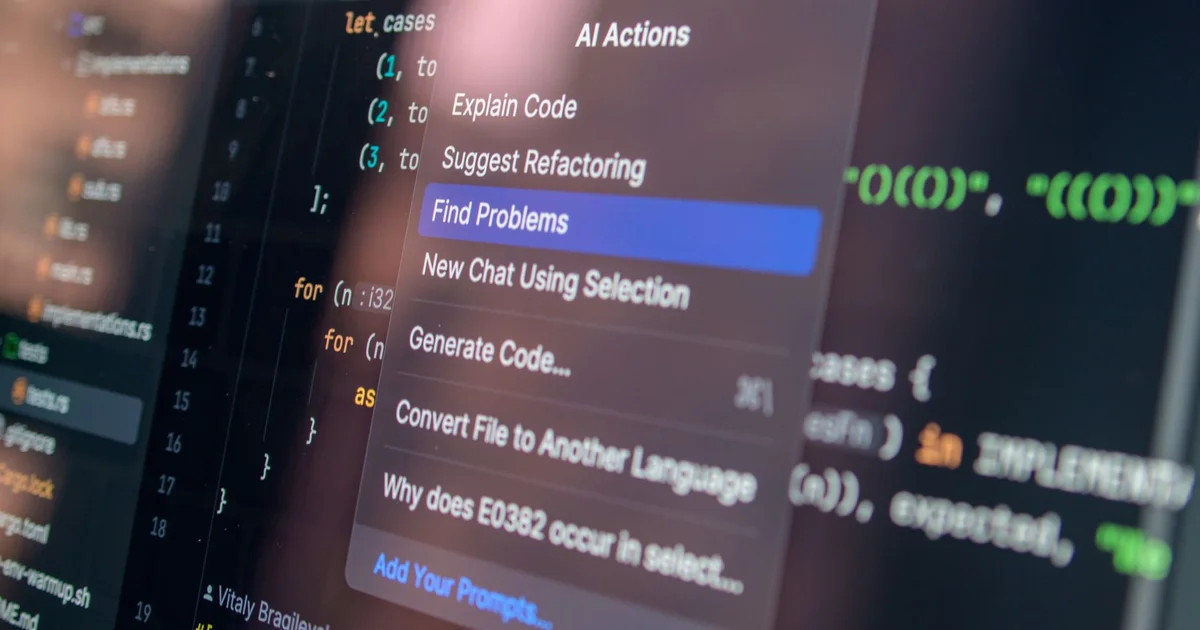
Imagine building a complex business application in just a few hours. This isn't a futuristic dream; it's the reality of November 2026. The no-code movement, once considered niche, has exploded into a strategic powerhouse, fundamentally reshaping how we create software. What's the secret ingredient behind this transformation? Artificial intelligence, acting not as a replacement, but as a core co-creator.
Gartner predicted that by 2025, 70% of new applications would use low-code or no-code technologies. By 2026, that figure is expected to hit 75%. This isn't just a trend; it's the default way to build for most new business applications. This shift has profound implications for businesses, entrepreneurs, and anyone with an idea they want to bring to life.
The Unstoppable Rise of No-Code and AI (November 2026)
The no-code and low-code market has seen phenomenal expansion. We're witnessing a complete paradigm shift, moving visual development from an alternative to the primary method for creating software. This growth is fueled by several key developments that have solidified no-code's position as a strategic imperative for digital transformation.
One of the most significant changes is AI's role. It has moved beyond being a simple add-on feature. Today, AI is a fundamental component, actively co-creating applications through smart app generation, pattern-based automation, AI-enhanced testing, and continuous optimization.
This powerful combination has given rise to the "citizen developer." These are non-technical employees, often called "business technologists," who are building technology outside traditional IT departments. Gartner reported that 41% of employees already fill this role. By 2026, developers outside formal IT are predicted to account for at least 80% of the user base for low-code development tools. In enterprises that have formally adopted no-code platforms, citizen developers now outnumber professional developers by approximately 4:1, with 100-120 million business users actively building on these platforms globally.
Platforms are also focusing heavily on enterprise-grade capabilities. This includes advanced security protocols, robust compliance controls, flexible role-based access management, high scalability, and seamless integration with legacy systems like ERP, CRM, and databases. The goal is to meet the demanding requirements of large organizations.
Enhanced collaboration features are also becoming standard. Tools now offer more robust functionalities, enabling multiple users to work on projects simultaneously. This fosters teamwork and speeds up development cycles even further.
AI: The Co-Creator, Not the Replacement
Some worried that AI would replace no-code, but experts widely agree that AI is actually making "governed no-code faster." The focus isn't just on raw speed anymore. It is about building trust through visual, bounded systems that are easy to explain, review, and hand over, especially for mission-critical applications. Gartner's June 2026 "Emerging Market Quadrant for No-Code Agent Builders" emphasizes the importance of governance, security, and platform flexibility for enterprise AI agents.
The real-world impact is clear. Consider Atonom, a finance and legal company. They built a full CRM in just three hours, replacing a $40,000/year Salesforce instance for approximately $1,200/year using AI-powered low-code. This is a staggering ROI.
eXp Realty, in marketing, built entire country-specific websites in a mere six hours and achieved an 85% reduction in support tickets. AppDirect rebuilt an $80,000 agency project in under one month for a fraction of the original cost. These aren't isolated incidents; they are becoming the norm.
Even established players like Microsoft are seeing immense value. A Forrester study commissioned by Microsoft modeled a 206% ROI over three years for Power Apps, with payback in under six months. These examples highlight how no-code, supercharged by AI, allows businesses to innovate at unprecedented speed and efficiency.
Market Momentum: Billions and Beyond
The numbers speak for themselves. The worldwide low-code development technologies market reached $26.9 billion in 2023. Gartner projects it to hit $44.5 billion by 2026, growing approximately 19% annually. MarketsandMarkets estimated the low-code platform market at $45.5 billion by 2025.
Looking specifically at no-code, The Business Research Company reported that the no-code development platforms market grew from $35.61 billion in 2025 to $45.24 billion in 2026, at a compound annual growth rate (CAGR) of 27.1%. They forecast it to reach $102.57 billion by 2030. Kissflow projects the global no-code and low-code market to reach $52 billion in 2026.
The no-code AI platform market is a particularly exciting segment. Grand View Research valued it at $6.4 billion in 2025 and projects it to grow to $8.4 billion in 2026, reaching $52.1 billion by 2033 at a CAGR of 29.8%. Fortune Business Insights provides a similar estimate, valuing the no-code AI platform market at $6.56 billion in 2025, growing to $8.6 billion in 2026, and an impressive $75.14 billion by 2034 with a CAGR of 31.13%.
Adoption rates are equally compelling. Gartner predicted that 70% of new applications would use low-code or no-code by 2025, rising to 75% by 2026. A staggering 84% of enterprises have already adopted low-code or no-code platforms. The efficiency gains are undeniable, with organizations reporting up to a 90% reduction in development time using no-code tools. No-code workflow automation leads to an average 65-70% reduction in process cycle time.
November 2026 Platform Updates: AI Takes Center Stage
The rapid pace of innovation in no-code tools is best seen in the latest platform updates from major players, many of which landed in November 2026 or very recently. AI is consistently at the heart of these advancements.
Microsoft Power Platform
Microsoft continues its aggressive push into AI-powered no-code. Their November 2026 update introduced modern attachments and new modern controls like Avatar group, persona, metrics card, and card gallery for canvas apps. A significant addition is the AI row summary for Dataverse records, now in public preview (Source: microsoft.com).
The September 2026 update brought Fluent Templates for Power Apps, Quick Start cards for Power Automate, and a refreshed UI for model-driven apps. Users also gained the ability to embed generative pages directly into model-driven app forms. Earlier in July 2026, Microsoft rolled out AI Agents built directly into Power Apps, and Copilot became capable of building entire applications from natural language prompts. Smarter Power Fx formula suggestions with AI, intelligent responsive app design, and enhanced integration with Microsoft 365 were also key innovations (Source: microsoft.com).
March 2026 saw Microsoft 365 Copilot become available in public preview directly inside model-driven Power Apps. An AI-first app builder was also launched at vibe.powerapps.com, making AI app creation from a prompt more accessible than ever (Source: microsoft.com).
Webflow
Webflow Conf 2026 in September was packed with announcements. They unveiled "Source by Webflow," an agentic platform for governed workspaces where marketing teams and AI agents collaborate. Other key releases included Webflow Campaigns for landing pages and variants, and Webflow AEO (Answer Engine Optimization) for visibility in AI search engines, now tracking Gemini and Claude (Source: website-files.com).
Further releases included Components in CMS rich text, the Box element, Guardrails for marketers, Breakpoint canvas, and Agentic translation in Webflow Localize. Throughout earlier 2026, Webflow focused on real-time collaboration, deeper AI integration including an AI site builder, content suggestions, and AI-driven SEO optimization. A rebuilt CMS supporting large-scale content also shipped. In June 2026, localization features rolled out for all customers, alongside a new integration with Figma for seamless design transitions (Source: website-files.com).
Zapier
Zapier, the automation giant, rebranded Zapier Agents to "AI by Zapier" in October 2026. This move integrates AI agents as a single, flexible step within Zaps, allowing AI to handle judgment-based tasks alongside fixed rules. This significantly enhances automation capabilities (Source: business-automated.com).
Throughout 2026, Zapier introduced Advanced Multi-step Zaps, now supporting up to 100 steps. AI-powered Suggestions for workflows, Built-in Data Formatting, Error Handling and Retry Logic, Team Collaboration Tools, and Custom App Integrations were also added. In April 2026, guided templates for Zaps were launched, and enterprise customers gained the ability to route AI inference through their own cloud providers like AWS Bedrock, with Google and Microsoft options in development. Zapier Canvas, introduced in 2025 and enhanced throughout 2026, provides a visual process mapping tool that can convert diagrams into working automations (Source: business-automated.com).
Airtable
Airtable's October 2026 roadmap and Fall 2026 Release revealed substantial updates. They announced an upgraded Omni, Airtable's built-in AI assistant, now Omni 2.0. Airtable Canvas, for building custom apps on live data, is now in open beta. A more powerful Model Context Protocol (MCP) was introduced to integrate external AI tools like Claude, ChatGPT, Gemini, and Cursor. Enhanced agent permissions with audit logs for centralized control were also part of the release (Source: airtable.com).
April 2026 brought a direct connection to Claude via MCP, bringing AI reasoning directly into workflows (Source: airtable.com). In March 2026, AI-powered automations were enhanced, and the Omni assistant became available across all plans, including free, following the DeepSky acquisition in October 2025 (Source: airtable.com).
The Future is Now: Predictions for a No-Code, AI-Powered World
The implications of these rapid advancements are far-reaching, shaping how businesses operate and how individuals create. We're moving towards a future where software development is truly democratized.
No-code tools, especially with AI integration, are empowering business users closest to the problems to build solutions rapidly. This helps address the global software developer shortfall, projected to reach 4 million unfilled roles by 2025. Anyone with an idea can now be a builder.
The role of IT departments is shifting dramatically. They are moving from being the sole builders to becoming enablers and governors. IT provides the infrastructure, security, and oversight for citizen development initiatives, ensuring that innovation happens safely and effectively.
We're also seeing a rise in AI Agent-First Workflows. AI agents are increasingly handling routine actions, making applications feel more like underlying infrastructure. The primary user interaction shifts to decision-making and refinement, rather than navigating complex interfaces. This is where platforms like TashiOS shine, allowing you to describe your ideas in plain English and let AI do the heavy lifting of building.
As AI becomes more powerful and widespread, the need for robust governance, audit logs, and granular permissions for both human and AI agents is paramount, especially in enterprise environments. Trust and control are key as these systems become more autonomous.
The role of founders and business leaders is evolving from hands-on builders to "editors." They focus on reviewing, refining, and shaping AI-generated output. This allows for faster iteration and a focus on strategic vision rather than technical implementation.
The trend also favors Hybrid Low-Code/No-Code Models. Platforms that offer visual development with the flexibility to extend functionality through custom code when necessary will thrive. This caters to both business users and professional developers, offering the best of both worlds.
Finally, seamless integration with existing enterprise systems like CRMs, ERPs, HRIS, and BI tools is crucial for widespread adoption. No-code solutions must fit neatly into a business's existing digital ecosystem to be truly effective.
Build Your Future with TashiOS
The world of no-code tools in November 2026 is an exciting place, brimming with possibilities. AI has transformed how we approach software creation, making it faster, more accessible, and more powerful than ever before. Whether you're a seasoned entrepreneur or someone with a groundbreaking idea, the tools are now available to turn your vision into reality.
Imagine simply describing your app idea in plain English and watching it come to life. That's the power of TashiOS. Our AI-powered operating system lets you build real apps, websites, online stores, and Android apps with no code at all. You can go live and start earning, all without writing a single line of code. Ready to create your next big thing? Start free with AI credits today and experience the future of building.