
It's official: if you're not using AI in your web design workflow, you're already behind. A recent survey found that a staggering 93% of web designers have used AI tools in the last three months. This isn't a future prediction; it's the reality of March 2026. AI has moved from a simple helper to a core creative partner, and it's completely changing how websites are built, managed, and experienced.
The pace of change is accelerating, with new developments emerging every month. From AI that designs alongside you to websites that adapt to every visitor in real time, the entire process is being reinvented. Here are the seven most important developments in AI web design you need to know about right now.
1. AI Is Now Your Creative Co-Pilot, Not Just a Tool
Forget the old days of AI as a basic automation script. Today, AI is a sophisticated co-designer. Designers are no longer starting from a blank page. Instead, they provide creative direction while an AI partner generates layouts, color schemes, and typography based on brand identity and user data. This frees up human designers to focus on high-level strategy and storytelling.
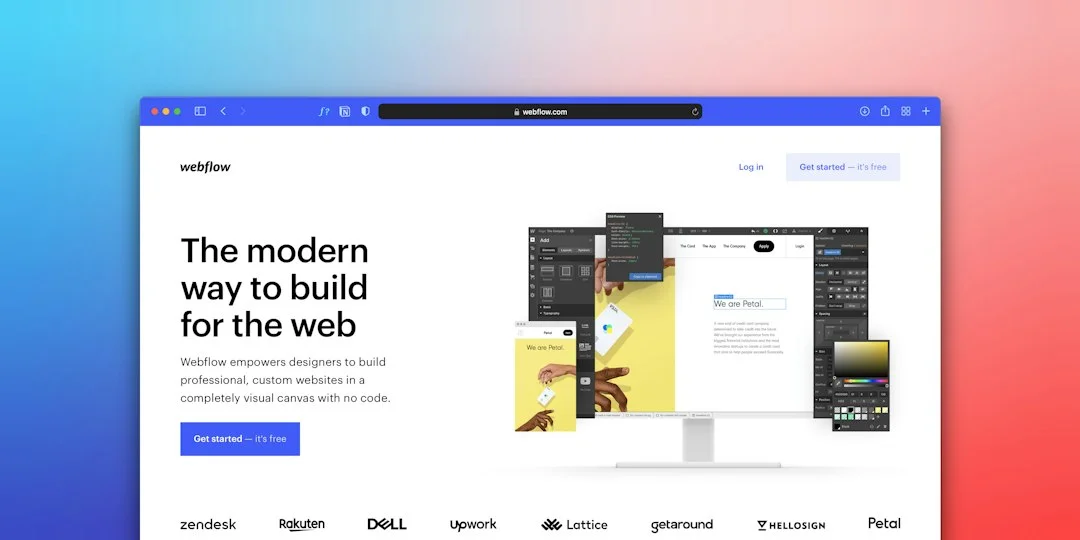
This new role is often called an "intent architect". Instead of manually pushing pixels, designers now orchestrate intelligent systems to execute their vision. Tools like Figma AI can generate responsive screen variations in hours, not days. Similarly, platforms like Framer AI and the latest Wix AI Website Builder can produce entire, fully-functional websites from just a few text prompts.
Big tech is taking notice. Google's acquisition of Galileo AI in late 2025 was a clear signal that AI-powered UI generation is a strategic priority. The message is simple: the future of design is a human and machine collaboration.
2. Websites Now Adapt to Every Single Visitor
Hyper-personalization is the new standard for user experience. We've moved far beyond simply adding a user's name to a welcome message. In 2026, websites dynamically change their content, layout, and calls-to-action (CTAs) for each individual based on their behavior, location, and even the device they're using.
The results speak for themselves. According to VWO, personalized CTAs convert an incredible 202% better than generic ones. E-commerce sites that use AI to show returning visitors products they've previously viewed have seen conversion lifts between 15% and 25%. Platforms like Netflix and Amazon set the standard, and now this level of real-time adaptation is becoming accessible to everyone.
AI-driven UX tools can now automatically adjust navigation menus for a returning customer versus a new prospect, or reorder content blocks based on what a user has shown interest in during their session. It's about creating a unique, one-to-one experience for every person who lands on your site.
3. Coding and Optimization Are Happening on Autopilot
The impact of AI on the development side is just as profound. AI has become the backbone of modern web development, automating tasks that once took countless hours of manual work. This massive increase in efficiency is speeding up the entire creation process.
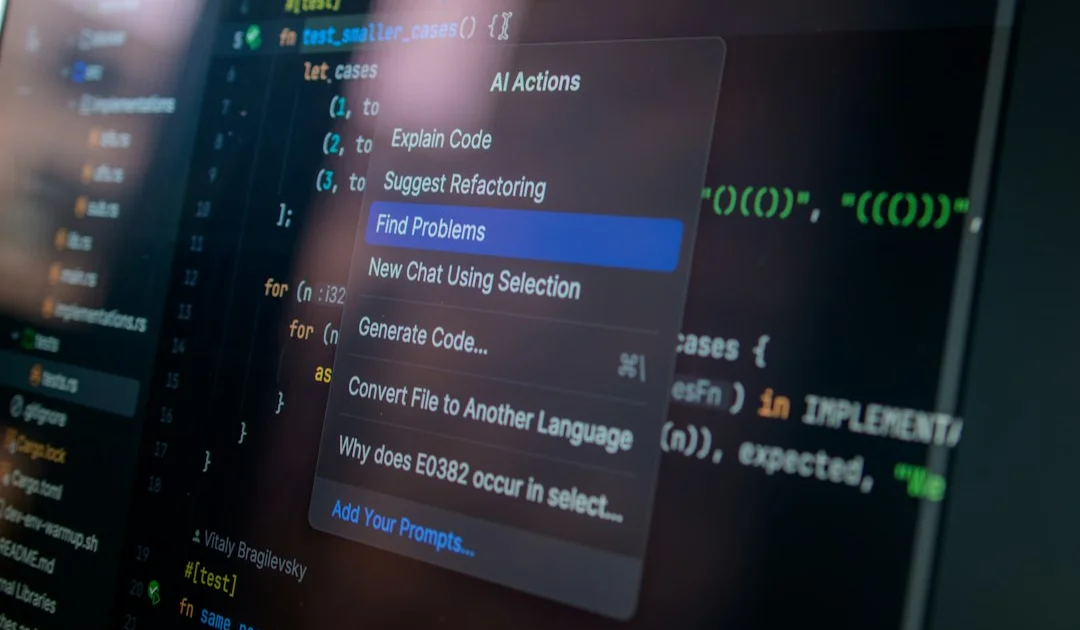
AI code assistants are now indispensable. A recent study showed that developers using tools like GitHub Copilot complete coding tasks 55% faster than those without. Other powerful assistants like Amazon Q Developer and Tabnine offer real-time suggestions and code completions, turning complex jobs into simple ones.
Optimization is also becoming automated. AI systems now run sophisticated A/B tests on their own, constantly trying new variations of headlines, images, and layouts. They learn from thousands of micro-interactions to optimize the user journey in real time, ensuring the site is always performing at its peak without constant human oversight. This is a core principle behind platforms like BuildEZ.ai where performance is built-in and continuously improved.
4. Your Old SEO Playbook Is Officially Obsolete
If you're still focused on traditional SEO, you're fighting yesterday's battle. The rise of AI-powered search, like Google's AI Overviews, has created a new discipline: Generative Engine Optimization (GEO). Marketing data from February 2026 shows that users are increasingly getting their answers directly from AI summaries instead of clicking through to websites. This is a fundamental shift in user behavior.
Recent Google updates confirm this new direction. The February 2026 Discover Core Update prioritized in-depth, authoritative content, filtering out clickbait that often ranked well in the past. Furthermore, Google's AI Overviews are expanding rapidly, now covering about 58% more industries year over year and often citing sources that aren't even in the top organic search results.
This means your goal is no longer just to rank number one. It's to become a cited, authoritative source for the AI itself. Businesses must adapt their content strategies to provide the clear, factual, and in-depth information that generative AI models are looking for.
5. The AI Website Builder Market Is Exploding
The demand for fast, easy, and intelligent website creation has caused the AI website builder market to skyrocket. Valued at $3.1 billion in 2024, the market is projected to hit $6.3 billion in 2026 and could reach an astonishing $25 billion by 2035, according to DataIntelo.
Adoption rates are massive. A Stack Overflow survey from January 2026 found that 84% of developers are now using or planning to use AI tools in their work. The market is filled with innovative players like Wix AI, Framer AI, Hostinger, and Durable, each offering unique approaches to AI-powered creation. Some, like NxCode, use a dual-agent system that acts as an AI Product Manager and Engineer, while Chariot allows users to build a site just by talking to a chatbot.
This growth shows a clear market shift. Businesses and creators want powerful tools that are easy to use, and AI builders are meeting that need. It's why platforms like BuildEZ.ai are gaining so much traction; they combine advanced AI capabilities with a user-friendly interface, making professional web design accessible to everyone.
6. AI Is Building Faster, More Accessible Websites from Day One
In the past, web accessibility and performance were often afterthoughts, addressed with fixes and patches after a site was already built. In 2026, that's no longer acceptable. AI is helping designers and developers build highly performant and accessible websites from the very beginning of the process.
AI tools can now predict accessibility issues during the design phase. They analyze color contrast, check for logical screen-reader navigation, and even estimate the cognitive load of a layout before a single line of code is written. This proactive approach saves time and ensures a better experience for all users.
Similarly, AI is crucial for performance. It helps build SEO-friendly site structures from the ground up and continuously monitors site speed and responsiveness in real-time. As user traffic changes, the AI can recommend or even automatically implement optimizations to keep the site running smoothly.
7. Why Human Creativity Still Matters in an AI World
With AI generating polished and perfect designs, an interesting counter-trend has emerged: a renewed appreciation for the human touch. To stand out in an AI-saturated world, many brands are embracing organic shapes, asymmetry, and authentic, human-centric imagery to build trust and create an emotional connection.
The best designers in 2026 are not being replaced by AI. Instead, they are learning to blend AI's efficiency with their own unique creativity. The prediction that AI would replace designers was wrong. As experts from Elementor note, AI is replacing designers who don't adapt to using AI.
The future of AI web design is about this powerful combination. It's about using intelligent tools to handle the repetitive work so that human creators can focus on what they do best: innovating, telling stories, and building brands that people love.
Your Next Step into the Future of Web Design
Reading about these trends is one thing, but experiencing them is another. The best way to understand the power of modern AI is to see it in action. If you're ready to build a website that's intelligent, personalized, and optimized from the start, exploring a platform like BuildEZ.ai is the perfect next step. It's a chance to stop just reading about the future and start building with it.