Imagine launching a professional website, complete with content, branding, and even SEO optimization, in just 15 minutes. In September 2026, this isn't a futuristic dream; it's the new reality for countless businesses and entrepreneurs. The AI website builder market is no longer a niche trend; it's a booming industry, transforming web development from a complex, time-consuming process into an increasingly automated and accessible endeavor.
This explosive growth is reshaping how businesses and individuals establish their online presence, making it possible for anyone to build sophisticated digital platforms with unprecedented speed and efficiency. The shift is so profound that what once took a full work week now often takes mere minutes. This is the era of the AI website builder, and it's here to stay.
The AI Website Builder Boom: A $3.24 Billion Market
The numbers tell a compelling story. The global AI website builder market is projected to reach a staggering $3.24 billion in 2026a significant leap from $2.69 billion in 2025 (precedenceresearch.com). This trajectory is set to continue, with the market expected to hit $17.43 billion by 2035, boasting an impressive Compound Annual Growth Rate (CAGR) of 20.55% from 2026 to 2035 (precedenceresearch.com).
This rapid expansion is fueled by a broader surge in AI spending, which is projected to reach $2.52 trillion in 2026, a 44% year-over-year increase. This massive investment accelerates the development of AI-native tools across the board, including those for website creation (hostinger.com). Small businesses are at the forefront of this adoption, with 58% now using generative AIa substantial increase from just 23% in 2023 (hostinger.com). This shows that AI website builders have moved from a novelty to a core component of the web creation category.
Cloud-based tools dominate this evolving market, accounting for approximately 81% of the share. Small and medium enterprises (SMEs) are driving nearly half of all revenue, contributing 49% of the total (precedenceresearch.com). The average time to produce a complete website draft has dramatically dropped from a full work week to just 15 minutes as of March 2026 (hostinger.com). This efficiency stems directly from AI's ability to generate full layouts, draft content, optimize for SEO, and even personalize user experiences in real-time.
Beyond Templates: AI as Your Intelligent Design Partner
AI website builders in 2026 are far more sophisticated than their early predecessors. They are defined by several key trends that are fundamentally changing the design process.
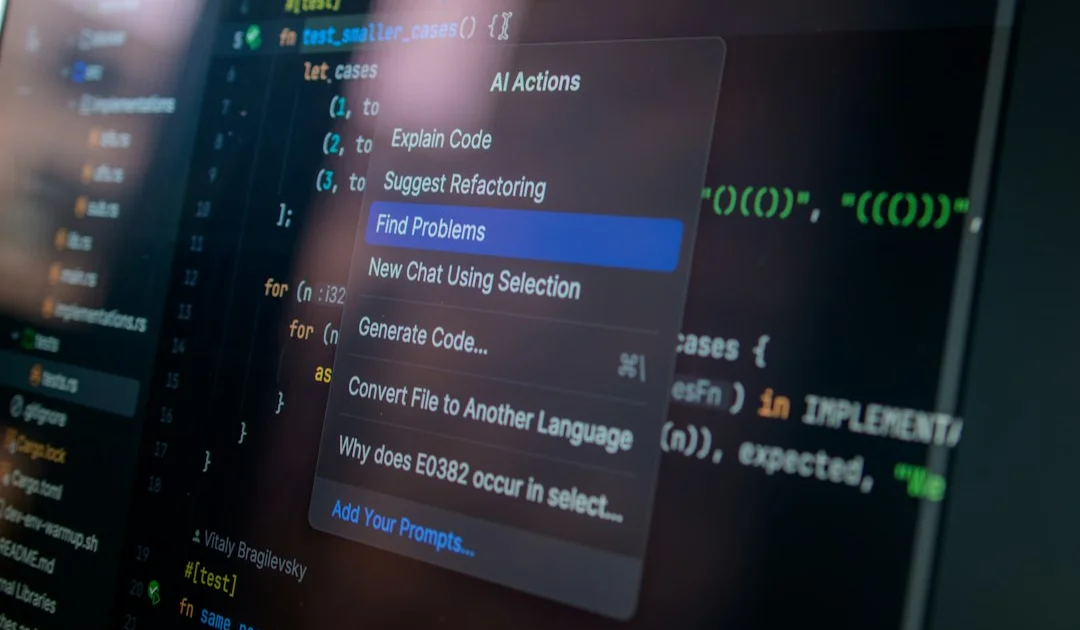
- Advanced AI Design Assistants: These tools do more than suggest color palettes. They generate entire layouts, offer real-time improvements, and understand design context to assist in complex decision-making (vezadigital.com).
- Personalization Engines: AI now analyzes user behavior, preferences, and browsing history to deliver tailored content. It dynamically adjusts elements like headlines, visuals, and calls-to-action to improve engagement and conversion rates (vezadigital.com).
- Automation of Code Generation and Prototyping: AI can produce wireframes, mockups, and early design concepts in minutes. This empowers designers to quickly explore multiple directions and iterate at lightning speed (vezadigital.com).
- AI-Driven UX Optimization: Based on observed user behavior, AI identifies usability issues and recommends accessibility improvements, making websites more intuitive and inclusive (vezadigital.com).
- Accessibility Compliance Automation: Ensuring websites meet accessibility standards is no longer a manual burden. AI assists in automatically identifying and rectifying compliance issues (vezadigital.com).
Experts view AI as having moved beyond basic template integration to an "intelligent design partnership." Matt Biggin, a copywriter, notes that AI is no longer an experiment but a fundamental tool reshaping how business websites are designed, optimized, and personalized (authentika.studio). The biggest shift is AI working in conjunction with designers and developers, becoming intelligent design partners rather than replacements.
However, a crucial human element remains. Tadas Kirtiklis highlights that while AI promises a professional online presence, "having a site and having a site that sells are still very different things" (onewithdigital.com). This emphasizes the ongoing need for human judgment, strategic thinking, and a deep understanding of business goals to truly succeed online.
Real-World Impact: Companies Redefining Web Creation
The market is vibrant with companies pushing the boundaries of what an AI website builder can do. Here are just a few examples making headlines in September 2026:
- Wix AI Website Builder (Wix Harmony / Wix Studio): This evolved system acts like a sophisticated chatbot. It generates unique, multi-page website drafts from simple business descriptions and goals, offering extensive customization and integrating AI-powered content, branding, marketing, eCommerce, and SEO tools (yacss.site).
- Hostinger AI Builder / Hostinger Horizons: Hostinger offers two distinct AI experiences. Their standard tool creates a site from a description, while Hostinger Horizons provides a "vibe-coding" environment for building and revising websites and applications through conversational AI (hostinger.com).
- 10Web: This AI-powered WordPress automation platform can recreate existing websites in WordPress using AI. It also generates new WordPress or WooCommerce sites and offers an Elementor-based builder with an AI copilot (yacss.site).
- GoDaddy Airo AI Builder: Prominently featured in July and September 2026, GoDaddy Airo helps users launch entire online businesses. It generates professional websites or web apps with branding, commerce capabilities, marketing tools, and analytics, all from a simple idea description (beehiiv.com, rudys.ai).
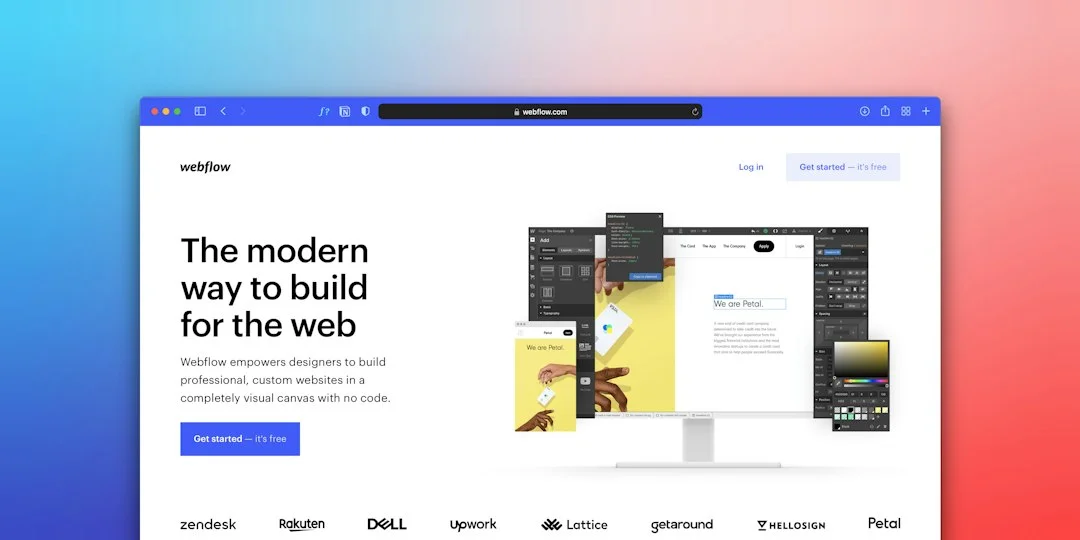
- Webflow (Source): At Webflow Conf 2026 in September, CEO Linda Tong unveiled "Source." This groundbreaking platform enables human users and AI agents to collaboratively build websites. Source gives AI agents direct code access while providing marketers with a visual interface (webflow.com).
- Elementor (Angie): Introduced in August 2026, "Angie" is an agentic AI that can take action directly within the WordPress dashboard. It builds components, plans, writes, and executes complex tasks natively (elementor.com).
- Base44: An AI app builder that allows users to describe what they want in plain language and get a working web app or website in minutes, complete with built-in data, logic, and integrations (base44.com). Ilay Granot, Marketing at Base44, notes, "One of the most powerful things about Base44 is how it democratizes app building" (base44.com).
- Durable: Known for its ability to generate fast, AI-powered site drafts and offer easy no-code editing (yacss.site).
- Framer AI: Transforms text prompts into fully functional layouts, producing performant, custom-feeling sites (yacss.site).
- SuperNinja by NinjaTech AI: Represents a conversational approach to web development, generating complete websites from prompts (ninjatech.ai).
These examples highlight a critical trend: the move towards agentic AI. These are AI systems that can not only generate content but also take action, make decisions, and execute tasks autonomously within platforms. This is where platforms like TashiOS shine, allowing users to describe their vision in plain English and generate functional apps, websites, and even online stores, democratizing online business creation for everyone.
The Numbers Don't Lie: Unprecedented Adoption and Efficiency
The impact of AI on web development is quantifiable and remarkable:
- Market Size: The global AI website builder market was valued at $2.69 billion in 2025 and grew to $3.24 billion in 2026 (precedenceresearch.com). Other estimates place the market at $3.51 billion in 2025, growing to $4.19 billion in 2026 (custommarketinsights.com).
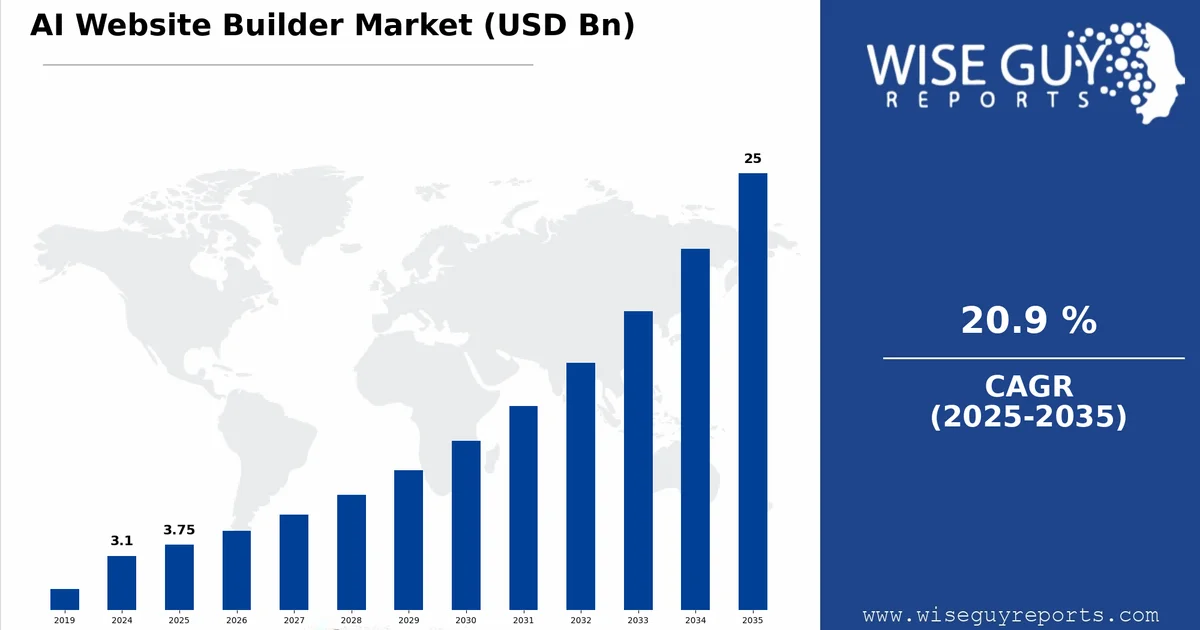
- Growth Projections: The market is projected to reach $17.43 billion by 2035 with a CAGR of 20.55% from 2026 to 2035 (precedenceresearch.com). Some projections are even more optimistic, seeing it reach $25 billion by 2035 with a CAGR of 20.9% (wiseguyreports.com).
- Regional Dominance: North America holds the largest market share, approximately 43% in 2025. The U.S. market alone is expected to grow at a 32.9% CAGR through 2033 (wseinfratech.com). Asia-Pacific is the fastest-growing region, with an estimated CAGR of approximately 18.8% through 2035 (precedenceresearch.com).
- Adoption Rates: A staggering 93-95% of Hostinger AI Builder users are first-time website builders (hostinger.com). Furthermore, 67.39% of business owners prefer AI website builders over traditional custom development (hostinger.com), and 41% of businesses use AI-powered tools specifically for website creation (hostinger.com).
- Efficiency: AI is reducing initial production time by an average of 70% for companies adopting these tools (hostinger.com). Launch times have dropped from 40 hours to about 15 minutes for a complete, functional draft (hostinger.com).
- Cost Reduction: AI website builders are disrupting traditional pricing models, reducing costs by 50-90% for common website types. Typical AI website builder subscriptions cost $15-$50 per month, a significant contrast to the $100-$300/month for traditional development (hostinger.com).
These statistics paint a clear picture: AI website builders are not just a convenient option; they are becoming the preferred, cost-effective, and incredibly efficient method for establishing an online presence for businesses of all sizes.
The Agentic AI Revolution: From Ideas to Live Applications
Recent news and announcements from September 2026 underscore the rapid pace of innovation. Webflow's unveiling of "Source" at Webflow Conf 2026, where human users and AI agents collaboratively build websites, marks a significant step towards more integrated AI partnerships (webflow.com). GoDaddy Airo AI Builder also continues to be prominently featured, empowering users to launch entire online businesses, not just simple websites (beehiiv.com, rudys.ai).
The introduction of agentic AI, like Elementor's "Angie" in August 2026, signifies a shift where AI can take direct action within existing platforms, executing complex tasks natively (elementor.com). This capability is further exemplified by SpaceXAI's "Grok Bot," a team of always-on agents working within tools and apps, and "Grok Build," which allows users to create and share websites, apps, games, and interactive dashboards (x.ai, playcode.io). This is precisely the vision behind platforms like TashiOS, where you can describe your ideas in plain language and launch real apps and websites, complete with built-in data and logic, with no code required.
These advancements mean that the barrier between an idea and a live, functional online presence is shrinking dramatically. The focus is moving from manual construction to intelligent orchestration, where AI agents handle the heavy lifting of development, allowing creators to focus on their vision and strategy.
The Future is Hybrid: Designers and AI, Hand in Hand
The rise of AI website builders has profound practical implications for the future of web design and development.
- Democratization of Web Design: High-quality web design, once accessible only to well-funded companies, is now within reach for small and mid-sized businesses, individuals, and first-time builders (hostinger.com). This opens up unprecedented opportunities for entrepreneurs globally.
- Faster Time to Market: New product launches, campaigns, and brand refreshes can be executed in weeks rather than months, significantly improving speed to market (hostinger.com). This agility is a massive competitive advantage.
- Shift to Hybrid Designers: AI is not replacing designers but enhancing their productivity by handling repetitive tasks. This allows professionals to focus on creativity, strategy, and human oversight. The industry is seeing a rise of "pi-shaped individuals" who are AI-pilled specialists working with agent teams (authentika.studio).
- Hyper-Personalized User Experiences: Websites are becoming increasingly "aware," learning and adapting from user interactions in real-time to provide intuitive and friction-free experiences (vezadigital.com).
However, it's important to acknowledge the challenges and limitations. While powerful, AI website builders may still struggle with brand precision, complex interactions, and can sometimes lead to platform lock-in (onewithdigital.com). SEO control, Core Web Vitals, real integrations, and editability can be areas where AI-generated sites fall short without human intervention. Generic AI-generated content without human review tends to perform poorly in search engines, reinforcing the need for human expertise (onewithdigital.com).
Looking ahead, AI is predicted to reshape 70% of the design and development effort for new web applications by the end of 2026 (yacss.site). The traditional distinctions between content creation, technical SEO, and development will continue to collapse as agentic AI takes on more integrated, end-to-end roles. Gartner projects that agentic AI could drive 30% of enterprise application software revenue by 2035, surpassing $450 billion, indicating a decade-long growth curve for AI-native tools (wseinfratech.com). Furthermore, 70% of new enterprise applications are expected to rely on low-code or no-code tools by 2026, a sharp rise from under 25% in 2020 (wseinfratech.com).
The future of web development is undeniably AI-driven, characterized by speed, accessibility, and intelligent collaboration. While the tools continue to evolve at a breakneck pace, the most successful ventures will be those that master the art of combining AI's incredible capabilities with human ingenuity, strategic oversight, and a keen understanding of their audience.
Ready to build your next big idea? Explore the power of AI-driven development with TashiOS. Start free with AI credits and see how quickly your vision can come to life, from apps to websites to online stores, all with no code required.